


![Falcon Chair Office Chairs Falcon Chair [Free Footrest Worth $150] Ergoworks](http://ergoworks.com.sg/cdn/shop/files/Falcon_A.png?v=1786502358&width=104)



![Ergoworks Dual Benching Electric Desk [Customizable] Dual Benching Electric Desk Ergoworks](http://ergoworks.com.sg/cdn/shop/files/EW-0223H-2.jpg?v=1778755296&width=104)





![Impact Junior Desk Chair Set Impact Ergonomic Kids Desk & Chair Set [Chair & Length Options Available] Ergoworks](http://ergoworks.com.sg/cdn/shop/files/KidDeskMainImageFinal.png?v=1778618207&width=104)
![Impact Junior Desk Chair Set Impact Ergonomic Kids Desk & Chair Set [Chair & Length Options Available] Ergoworks](http://ergoworks.com.sg/cdn/shop/files/gray_ff76a24f-26d1-469b-b2d5-0013d4a950d7.jpg?v=1785487301&width=104)





PART 1 – Introduction
The absence of pain is often interpreted as a sign that the body is coping well with daily work demands. Many professionals assume that if they can complete their tasks without discomfort, their physical health is not being compromised. However, this assumption does not always reflect how the body actually responds to sustained work routines.
Productivity and sustained focus can continue even as physical strain accumulates quietly beneath awareness. The human body is capable of adapting to stress in the short term, which allows individuals to meet deadlines and maintain performance even when underlying stress is building within muscles, joints, and connective tissues. This ability to adapt is useful for performance, but it can delay early warning signals that would otherwise prompt adjustment.
Perceived comfort reflects how a position feels in the moment, while mechanical load describes how the body is being stressed over time. A chair may feel comfortable during a meeting, and a desk setup may seem adequate during a busy afternoon, yet the structural demands placed on the spine and shoulders may tell a different story when maintained for hours each day. Comfort reflects sensation, but it does not always reflect how force is distributed over time.
Workplace habits act as repeated physical exposure rather than isolated movements, shaping how strain develops across workdays. Sitting in the same posture, leaning forward to read a screen, or holding a mouse in a fixed position may seem harmless individually, but repeated daily patterns can influence how the body distributes load across muscles and joints. These exposures are rarely dramatic, yet their consistency makes them significant.
Physical strain commonly forms before discomfort becomes noticeable, making the early stages easy to overlook. By the time stiffness or soreness appears, the body has often been adapting to stress for weeks or even months.z
This discussion focuses on how everyday workplace habits influence physical load before fatigue, injury, or pain become the primary concern. Understanding these patterns is particularly beneficial for working professionals, remote employees, and organisations in Singapore seeking to support long-term physical resilience rather than short-term relief. It shifts attention from reacting to pain towards understanding how load develops in the first place.
Key Takeaways
-
The absence of discomfort does not mean the body is free from strain, as physical load can accumulate quietly during routine desk work.
-
Repetition and prolonged stillness gradually increase mechanical stress on the neck, shoulders, back, and hips, even when effort feels minimal.
-
Discomfort often appears after work because the body compensates during tasks and signals fatigue only after sustained exposure.
-
Early awareness and proactive workstation adjustments support long-term physical resilience more effectively than waiting for symptoms to develop.
PART 2 – How Workplace Habits Gradually Load the Body
2.1. How Repeated Workplace Habits Create Physical Load Without Immediate Warning
Daily work routines rarely feel demanding in isolation, yet their effects are shaped by how often and how long they are repeated. Understanding how the body adapts to these patterns helps explain why strain can develop without obvious early signs.
Why The Body Adapts Before It Signals Discomfort
Muscles and joints naturally compensate to maintain stability and task performance during repeated workplace activities. In many office environments, daily workplace habits such as prolonged typing, leaning towards a laptop, or holding a phone between the shoulder and ear become routine. These patterns may involve early physical loading that is too subtle to disrupt concentration, yet still influences how forces are absorbed by the spine and surrounding tissues.
Early mechanical strain is distributed across surrounding tissues without interrupting workflow or focus. The body prioritises continuity of function, allowing employees to meet deadlines and maintain productivity even as repeated physical exposure at work quietly accumulates in the background. This adaptive capacity often delays the perception of discomfort.
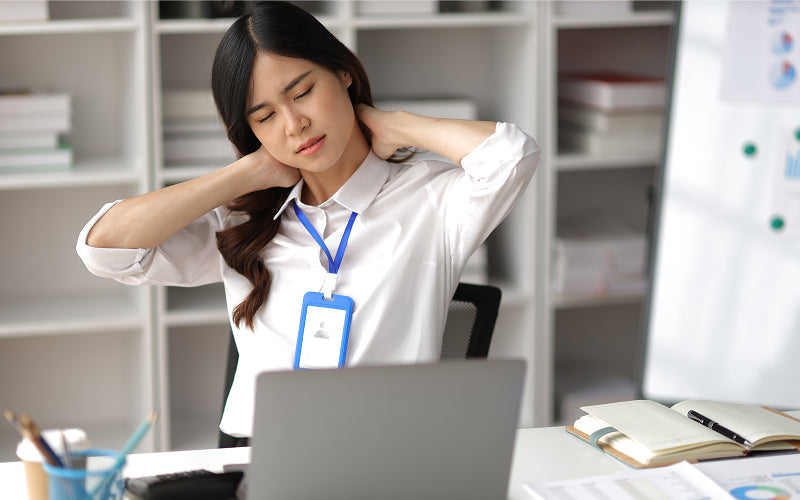
The body is designed to preserve movement and performance, so physical signals are moderated until stress exceeds a certain threshold. As a result, workplace habits can continue unchanged for months before any noticeable warning appears. For example, an individual may notice they frequently rub their neck after long calls or shift repeatedly in their chair by late afternoon. These small behaviours are often responses to accumulated load rather than isolated discomfort.
How Repetition Turns Manageable Effort Into Cumulative Strain
Low-level physical stress is generally well tolerated in isolated moments. A slight forward lean during a presentation or a brief period of shoulder elevation while typing may not feel demanding.
However, repetition across workdays transforms short-term effort into sustained exposure. When daily work patterns are performed consistently with minimal variation, the body is exposed to cumulative physical strain that develops gradually rather than suddenly. This strain does not arise from one significant event but from continuous low-grade loading.
Physical demand becomes part of the background of the workday, blending into routine activity rather than standing out as a clear event. Over time, workplace habits that appear manageable in isolation can influence how joints, muscles, and connective tissues adapt to ongoing mechanical stress.

2.2. Why Static Work Positions Feel Effortless but Increase Strain Over Time
How Stillness Reduces Natural Movement And Load Distribution
Prolonged seated or fixed positions reduce posture variation throughout the day. When individuals remain at a desk without regular movement, force is shared less effectively between muscle groups. Holding the same position for extended periods limits how load is redistributed, concentrating demand in the same anatomical regions over time.
Physical load becomes localised when movement patterns remain unchanged. In desk-based roles, increased visual and cognitive focus reduces spontaneous micro-adjustments, allowing strain to accumulate quietly. Workplace habits that encourage prolonged stillness may feel efficient, yet they reduce the body’s natural mechanism for distributing stress. Workstation design plays an important role in shaping these patterns. When the environment limits variation, even minor adjustments become less frequent.
Introducing dynamic elements, such as a height-adjustable desk, can help reintroduce posture variation, but the benefits depend on whether daily routines support regular transitions between sitting and standing.
Why Static Effort Goes Unnoticed During Desk-Based Work
Muscle activity during desk work often remains consistently active at low levels. This activity stays below the threshold that typically signals fatigue or discomfort, making it difficult to detect in the moment.
Visual tasks demand sustained attention, particularly when using multiple screens. Without appropriate monitor arms to support optimal screen height and distance, subtle forward head positioning may become embedded within daily routines. Over time, these small positional changes increase load on the cervical spine without generating immediate warning signals.
Ongoing muscular demand continues without clear sensory cues. A lack of immediate discomfort does not mean the body is free from mechanical stress.
2.3. Why Feeling “Comfortable” Can Still Mean the Body Is Under Load
Why Comfort Reflects Sensation Rather Than Physical Demand
Comfort describes how a position feels in the present moment. It reflects sensory feedback such as pressure distribution or surface softness, rather than the total mechanical load experienced by the body.
A well-cushioned ergonomic office chair can reduce surface pressure and improve seated support, yet prolonged periods of minimal movement may still sustain low-level muscular engagement. The body may feel settled and supported, even as posture wellness is influenced by prolonged, unvaried positioning.
Comfort, therefore, represents perception, not the complete mechanical picture.
Why Comfort Alone Is Not Enough For Ergonomic Support
Comfort does not account for duration, repetition, or lack of movement. Physical load may remain constant even when discomfort is absent.
This explains why some professionals who invest in ergonomic office furniture solutions still experience gradual strain if workplace habits remain unchanged. Ergonomic equipment can support better alignment, but the way it is used daily determines whether the load is effectively managed.
In some settings, even collaborative spaces such as a meeting pod can encourage extended seated discussions without sufficient posture variation if regular movement is not intentionally integrated into daily routines.
2.4. What Happens When Workplace Habits Become Automatic
Repeated workplace behaviours gradually shift posture and movement into unconscious patterns. As these routines stabilise, active awareness of body positioning decreases during routine tasks.
Common interactions such as reach distance, head orientation, and seating posture become standardised across the day. When workplace habits are repeated consistently, opportunities for natural self-correction decline. This is particularly relevant in home offices where environmental cues may not prompt regular adjustment.
As these behaviours become automated, inefficient positioning can persist without conscious review. Over time, routines that feel normal may continue shaping mechanical load silently.
Physical awareness often returns only when accumulated strain begins to interfere with comfort, concentration, or task endurance. By this stage, daily routines have already influenced how stress has been distributed across the body, highlighting the importance of early recognition rather than waiting for pain to develop.
PART 3 – Where Physical Strain Commonly Begins in Everyday Work Patterns

3.1. How Screen-Focused Work Habits Gradually Load the Neck and Upper Back
Why Screen Height And Viewing Distance Influence Head Position
The head naturally shifts forward to maintain visual clarity during prolonged screen use. Even a small forward adjustment increases the demand placed on the neck, as muscles must stabilise the head when it moves away from neutral alignment. This adjustment often happens gradually and without conscious awareness.
Neck muscles take on increased stabilisation demand as the head remains slightly forward for extended periods. Minor positional changes, once adopted, tend to remain unchanged during focused work. Over time, this sustained positioning contributes to mechanical stress across the upper spine.
In Singapore’s office and home working environments, where screen-based tasks dominate much of the day, this pattern is common. It reflects why screen-related posture support is a core consideration in ergonomic workstation design, particularly in environments supported by Ergoworks.
How Sustained Head Positioning Increases Upper-Body Strain
When head positioning remains fixed, continuous muscle engagement replaces natural movement variation. Instead of alternating between brief periods of activity and relaxation, muscles remain active at low levels for extended durations.
Physical load accumulates quietly without triggering sharp stiffness or immediate discomfort. Strain can develop even when posture appears acceptable, because small deviations maintained over long periods increase demand.
Because these changes occur gradually, individuals may not associate mild tightness or fatigue with earlier screen positioning. This highlights the importance of preventive adjustments rather than waiting for persistent discomfort to appear.
3.2. Why Desk Interaction Habits Affect the Shoulders and Arms
How Habitual Reach Patterns Increase Shoulder Load
Desk-based tasks often require the arms to remain active without consistent support. Typing, mouse use, and document handling involve repeated forward reach patterns that may seem minor but are sustained over long periods.
Shoulder muscles take on a stabilising role to hold arm position during these repeated movements. When forearms are not adequately supported, muscles remain engaged to maintain alignment.
Sustained stabilisation gradually replaces natural cycles of engagement and release. Physical load increases over time, even when the effort involved feels minimal during any single task.
Why Shoulder Tension Develops Without Immediate Warning Signs
Shoulder muscles are capable of functioning normally despite prolonged engagement. Continuous low-level activation does not usually trigger early discomfort signals.
Strain therefore accumulates across workdays rather than appearing during a single activity. Discomfort often becomes noticeable only after exposure exceeds individual tolerance.
This gradual build-up helps explain why Ergoworks emphasises arm, shoulder, and upper-back support as part of a holistic posture wellness approach. Rather than addressing isolated symptoms, the focus is on managing how load is distributed throughout daily work routines.
3.3. Why Seated Workplace Habits Affect the Lower Back and Hips First
How Prolonged Sitting Influences Pelvic Positioning
The position of the hips plays a central role in determining how load is transferred through the spine. During prolonged sitting, natural shifts in pelvic alignment become less frequent.
Sustained sitting reduces the subtle adjustments that normally help distribute pressure evenly. As movement decreases, the body relies more heavily on passive support structures to maintain stability.
Limited variation in seated posture narrows the range of load distribution. Over time, the same tissues are exposed to repeated demand without adequate relief.
What Happens When Hip Movement Is Restricted During Workdays
When hip movement is restricted, greater mechanical demand is placed on the lower back. As mobility options decrease, spinal structures absorb a higher proportion of load.
Discomfort tends to appear gradually, often later in the day or across the workweek rather than immediately. Individuals may attribute stiffness to fatigue without recognising the underlying pattern of sustained positioning.
These patterns reinforce why seating support that maintains pelvic stability and balanced posture is foundational in ergonomic solutions. Supporting natural alignment helps reduce unnecessary mechanical stress during extended seated work.
3.4. How Reduced Movement Affects Circulation and Joint Comfort
Why Circulation Changes Occur Without Numbness Or Pain
Prolonged static positions reduce the natural pumping effect created by regular muscle contraction. Movement assists circulation by encouraging blood flow through active tissues.
When movement decreases, circulation slows gradually rather than stopping abruptly. Because this change is subtle, noticeable warning signs are often delayed.
Instead of sharp pain, individuals may experience mild heaviness, stiffness, or reduced ease of movement. These sensations are easily dismissed during busy workdays.
How Prolonged Stillness Increases Joint Compression Over Time
Joints remain under continuous load when positions are held without variation. Limited movement reduces opportunities for pressure redistribution across joint surfaces.
As recovery between workdays becomes less efficient, cumulative loading increases. Over weeks and months, this sustained demand may influence joint comfort and flexibility.
This cumulative effect highlights why movement allowance and posture adaptability are essential to long-term ergonomic comfort in desk-based environments. Supporting regular posture variation is not about reacting to pain but about reducing mechanical stress before symptoms develop.
PART 4 – Why Pain Is a Late-Stage Signal, Not an Early Warning
4.1. Why The Body Often Feels Fine During Work But Sore Afterwards
During focused desk work, the body prioritises task performance over signalling discomfort. Cognitive demands, deadlines, and screen engagement take precedence, which means subtle physical feedback may not reach conscious awareness while work is ongoing.
Low-level strain is managed quietly through muscular compensation and joint tolerance. Supporting muscles increase their activity to maintain stability, allowing individuals to continue typing, reading, or attending meetings without interruption. Because this compensation is effective in the short term, it can mask the gradual build-up of load.
Pain frequently appears only after work, when sustained mechanical demand has already accumulated across the day. Once the individual leaves the desk and shifts into a different posture, previously stabilising muscles may begin to relax, making underlying tension more noticeable.
This timing makes it difficult to associate discomfort with earlier workplace habits. Because symptoms tend to appear later, soreness is often attributed to general fatigue rather than sustained mechanical demand. Many professionals only begin to question their setup when evening stiffness becomes a recurring pattern rather than an occasional occurrence.
4.2. What Early Posture-Related Strain Can Feel Like
Some professionals notice they feel temporary relief only after standing, stretching, or leaning back. Others may find that weekends feel restorative at first, but less so over time. These patterns can indicate that physical load has been accumulating across workdays.
Early strain is more likely to present as reduced ease of movement rather than sharp pain. Individuals may notice that turning the head feels slightly restricted or that standing up from the chair requires a brief adjustment period.
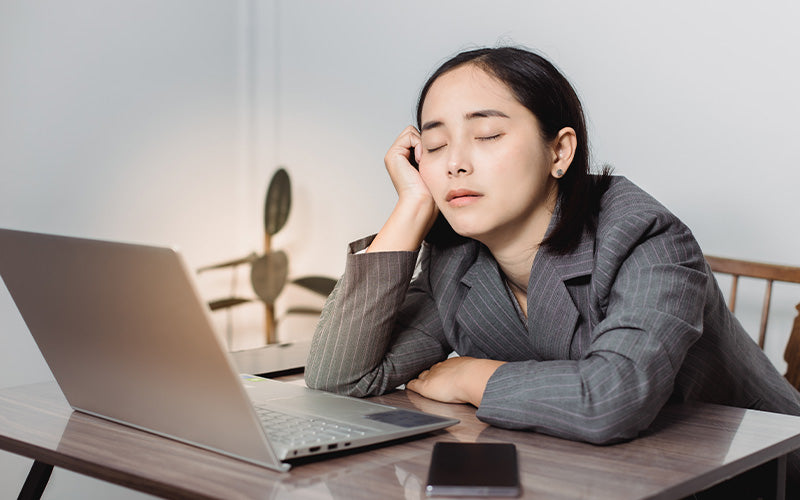
End-of-day heaviness in the shoulders, lower back, or legs is another common sign. This sensation may feel like fatigue rather than injury, which makes it easy to dismiss.
Across the workweek, stiffness may increase gradually without a single trigger event. By understanding these early indicators, individuals and organisations can make informed decisions about workstation design and posture support before symptoms escalate. This proactive perspective aligns with Ergoworks’ approach of addressing load management early, rather than responding only after discomfort becomes persistent.

Questions You Might Ask
1. Why Do Workplace Habits Matter If There Is No Pain Yet?
Pain is not the body’s earliest signal of strain. In many cases, physical stress accumulates quietly as muscles, joints, and supporting structures adapt to repeated routines. These adaptations allow daily tasks to continue without interruption, even as mechanical load increases. Because this process does not immediately interfere with function, discomfort often appears only after prolonged exposure, making workplace habits relevant long before pain becomes noticeable. This perspective aligns with how Ergoworks approaches posture wellness, focusing on early mechanical stress rather than waiting for discomfort to surface.
2. How Can Ergonomic Support Influence Workplace Habits Over Time?
Ergonomic support shapes how the body interacts with the work environment across the day. Well-designed setups reduce unnecessary physical load by encouraging more balanced positioning and allowing subtle adjustments to occur naturally. Over time, features such as adjustability and appropriate support help interrupt static exposure, shaping workplace habits so that excessive mechanical demand is reduced before it builds. This is reflected in how Ergoworks designs ergonomic solutions to support consistent daily use rather than short-term correction.
3. Why Does Posture Wellness Matter More Than Short-Term Comfort?
Short-term comfort can mask underlying physical strain without addressing how the load is distributed over time. Posture wellness focuses on sustained physical support that remains effective across extended periods of daily use. This approach recognises that workplace habits shape physical health gradually, and that consistent, well-supported posture plays an important role in maintaining long-term comfort and function. This long-term view underpins Ergoworks’ focus on posture wellness as a foundation for everyday work comfort in Singapore.
Conclusion

Repeated workplace habits influence physical strain in subtle but measurable ways, long before discomfort becomes noticeable or disruptive. Daily routines that seem harmless in isolation can shape how load is distributed across the body over weeks, months, and even years of consistent work.
Ergonomic support is most effective when viewed as a long-term health consideration rather than a response to symptoms. Preventive strategies focus on reducing mechanical stress before it escalates into persistent discomfort or reduced mobility.
In Singapore’s screen-intensive and desk-based work culture, Ergoworks supports healthier workplace habits by focusing on posture wellness and sustained ergonomic solutions that help the body remain supported throughout daily routines. The goal is not simply short-term comfort, but consistent alignment and load management that support ongoing physical resilience.
For individuals and organisations seeking greater clarity around posture wellness and long-term comfort, Ergoworks offers ergonomic solutions designed to support consistent posture and physical balance throughout the workday. By aligning daily work routines with evidence-informed ergonomic principles, professionals can maintain performance while safeguarding long-term physical well-being.


Leave a comment
This site is protected by hCaptcha and the hCaptcha Privacy Policy and Terms of Service apply.