


![Falcon Chair Office Chairs Falcon Chair [Free Footrest Worth $150] Ergoworks](http://ergoworks.com.sg/cdn/shop/files/Falcon_A.png?v=1786502358&width=104)


![Ergoworks Dual Benching Electric Desk [Customizable] Dual Benching Electric Desk Ergoworks](http://ergoworks.com.sg/cdn/shop/files/EW-0223H-2.jpg?v=1778755296&width=104)





![Impact Junior Desk Chair Set Impact Ergonomic Kids Desk & Chair Set [Chair & Length Options Available] Ergoworks](http://ergoworks.com.sg/cdn/shop/files/KidDeskMainImageFinal.png?v=1778618207&width=104)
![Impact Junior Desk Chair Set Impact Ergonomic Kids Desk & Chair Set [Chair & Length Options Available] Ergoworks](http://ergoworks.com.sg/cdn/shop/files/gray_ff76a24f-26d1-469b-b2d5-0013d4a950d7.jpg?v=1785487301&width=104)








Key Takeaways
-
Physical strain often develops gradually through repeated daily habits rather than sudden discomfort, making consistent support more important than short-term comfort fixes.
-
Balanced support helps muscles work efficiently throughout the day, reducing fatigue and the need for constant compensation during prolonged sitting or focused tasks.
-
Stable alignment plays an important role in preserving joint mobility over time, supporting smoother movement and reducing interference with everyday activities.
-
When daily physical stress is managed more effectively, the body is better able to recover between days, supporting sustained energy and function across work and life routines.
Introduction
Ergonomics is often associated with comfort, but its more meaningful value lies in how it supports the body over time. The benefits of ergonomics become clearer when daily environments are designed to work with natural posture and movement rather than forcing the body to adapt. When physical strain is managed consistently, muscle effort is better balanced, recovery becomes more reliable, and everyday tasks feel more sustainable. This approach reflects established workplace ergonomic principles that prioritise prevention over correction. For working professionals, students, and families in Singapore, this long-term perspective is increasingly relevant as routines involve extended sitting, screen use, and repetitive movements throughout the day.
Reducing Accumulated Physical Strain
Over the course of a typical day, small physical demands that seem insignificant in isolation can accumulate steadily across daily routines. Sitting, reaching, and maintaining fixed positions place repeated stress on the same areas of the body, even when discomfort is not immediately noticeable. One of the key benefits of ergonomics is its ability to distribute physical load more evenly. This reduces the likelihood that routine postural stress gradually concentrates in areas such as the neck, shoulders, or lower back. By supporting neutral posture and reducing unnecessary effort, ergonomic environments help prevent everyday habits from progressing into long-term physical issues that can interfere with sustained work or study.
Supporting Sustained Muscle Performance
Comfort alone does not guarantee healthy muscle function. Muscles are meant to alternate between engagement and rest, but inadequate support often keeps certain muscle groups active for extended periods. Over time, this leads to quiet fatigue and compensatory movement that is difficult to notice in the early stages. Ergonomic conditions encourage more balanced muscle engagement, allowing effort to be distributed across the body rather than concentrated in a few areas. This balanced approach supports long-term physical resilience by helping muscles work efficiently instead of constantly compensating for poor alignment. Well-designed ergonomic furniture plays an important role here by maintaining support across different tasks and postures throughout the day.
Preserving Joint Mobility Over Time

Joint health is influenced not only by how much joints move, but by how consistently they are positioned and loaded. Repeated uneven pressure can contribute to stiffness and reduced range of motion as routines remain unchanged. One of the key practical benefits of ergonomics is its ability to support stable joint positioning during everyday activities such as typing, reading, and writing. When joints are kept closer to their natural alignment during prolonged tasks, unnecessary compression and strain are reduced. This form of musculoskeletal health support becomes increasingly relevant for individuals whose work or study patterns involve long hours in similar postures.
Improving Recovery Between Workdays
Physical resilience depends on the body’s ability to recover, not only its ability to tolerate strain. When daily physical stress remains high, fatigue tends to carry forward rather than resolving overnight. Ergonomic support helps limit this cumulative effect by reducing unnecessary physical load during the day, allowing natural recovery processes to function more effectively between workdays. For individuals who spend long hours seated, a properly adjusted support chair helps reduce postural load and limit residual strain that often persists beyond working hours. This distinction between managing strain during the day and supporting recovery after it ends is essential for sustaining long-term physical function.
Benefits Beyond the Desk
The effects of ergonomic support extend beyond the immediate workspace. When the body experiences less strain during seated tasks, routine activities such as walking, lifting, and leisure movement often feel more controlled and manageable. This continuity between work and daily life highlights how the benefits of ergonomics support functional movement rather than addressing workplace comfort in isolation. Reduced physical stress during structured tasks helps preserve energy and coordination for movement outside work or study hours.
How Ergonomic Support Reinforces Long-Term Wellbeing

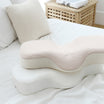
By focusing on long-term support rather than short-term ease, ergonomics becomes a foundation for sustained physical well-being. Support that maintains alignment during work should also encourage healthy positioning while at rest. Products designed for recovery, such as an ergonomic pillow, help maintain neutral spinal alignment beyond working hours and reinforce the same principles applied during the day. This continuity between active use and rest allows the body to adapt more consistently to daily demands without interruption.
Conclusion
When viewed over time, the benefits of ergonomics are most evident in the consistency with which the body is supported across work, rest, and daily movement. Thoughtful support helps reduce accumulated strain, sustain muscle performance, preserve joint mobility, and improve recovery across work and life routines. Over time, this allows everyday environments to support the body more reliably rather than requiring it to compensate.
If you are evaluating how well your current workspace or study environment supports long-term posture and movement, exploring ergonomic solutions designed for sustained use is a practical next step. Ergoworks provides ergonomically informed solutions that help individuals and families create environments aligned with the body’s natural movement and long-term recovery.


Leave a comment
This site is protected by hCaptcha and the hCaptcha Privacy Policy and Terms of Service apply.