
![Falcon Chair Office Chairs Falcon Chair [Free Footrest Worth $150] Ergoworks](http://ergoworks.com.sg/cdn/shop/files/Falcon_A.png?v=1786502358&width=104)


![Ergoworks Dual Benching Electric Desk [Customizable] Dual Benching Electric Desk Ergoworks](http://ergoworks.com.sg/cdn/shop/files/EW-0223H-2.jpg?v=1778755296&width=104)





![Impact Junior Desk Chair Set Impact Ergonomic Kids Desk & Chair Set [Chair & Length Options Available] Ergoworks](http://ergoworks.com.sg/cdn/shop/files/KidDeskMainImageFinal.png?v=1778618207&width=104)
![Impact Junior Desk Chair Set Impact Ergonomic Kids Desk & Chair Set [Chair & Length Options Available] Ergoworks](http://ergoworks.com.sg/cdn/shop/files/gray_ff76a24f-26d1-469b-b2d5-0013d4a950d7.jpg?v=1785487301&width=104)









Key Takeaways
-
Even a light workday can feel tiring when attention keeps moving between emails, calls, messages, and small tasks without enough time to settle.
-
Small interruptions may seem harmless on their own, but repeated shifts can quietly add to mental strain and make it harder to stay clear, focused, and productive.
-
A calmer work setup can help reduce unnecessary distractions by keeping essential items within reach, supporting comfortable posture, and making the space easier to return to throughout the day.
-
Simple habits such as grouping similar tasks, setting clearer work boundaries, and taking proper pauses can help the mind reset more naturally throughout the day.
Introduction
A workday does not need to be packed with urgent deadlines to feel mentally tiring. Many professionals in Singapore move through days filled with emails, short calls, messaging apps, admin tasks, quick decisions, and small interruptions.
On paper, the workload may look light. In reality, you find yourself staring at fifteen open browser tabs, constantly clicking between a half-written email, a WhatsApp message, and a spreadsheet, all while trying to remember what you were doing five minutes ago. In practice, the constant shifting of attention can create task switching fatigue, a chronic mental drain caused by the repeated cognitive effort required to switch attention between unrelated tasks, leaving the mind feeling scattered even when no single task was especially difficult.
This happens because mental effort is not only shaped by the size of a task. It is also shaped by how often the mind has to stop, reset, and rebuild focus. When attention is pulled from one activity to another too quickly, the mind may not get enough time to properly settle. Over several hours, these small shifts can build into a quiet form of strain that feels out of proportion to the actual workload.
How Switching Between Tasks Creates Hidden Mental Load
Every time you move from writing a report to replying to a message, checking a spreadsheet, joining a call, or handling a quick household matter during remote work, your mind has to change context. It must remember what the previous task required, understand what the new task needs, and adjust your focus accordingly. This creates a cognitive switching cost, even when the tasks are simple. Over time, task switching fatigue builds because the mind keeps using energy to reorient itself instead of staying with one clear flow of work.
This hidden load is easy to overlook because each switch can feel small, especially on quieter workdays. Answering one email may take only a minute. Checking one message may feel harmless. However, when these moments happen repeatedly, they break the rhythm of attention. For office employees, remote workers, students, and parents managing work alongside family routines, the result can be a day that feels busy but not deeply productive.
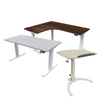
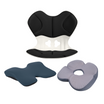
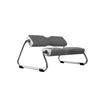
For Singapore professionals setting up a home office or companies looking to optimize shared work areas, investing in specialised ergonomic office furniture solutions is critical. When a workspace is poorly configured, physical micro-adjustments, like shifting to ease lower back pressure or leaning forward to read a screen, coincide with mental re-orientation. High-quality ergonomic setups provide a consistent physical foundation that actively minimizes these physical distractions, allowing the brain to recover its momentum and preserve precious cognitive energy.
How to Reduce Small Focus Interruptions in Your Workspace
Once you understand where these small interruptions come from, it becomes easier to adjust your workspace so that focus feels more natural to return to.
-
Keep frequently used items within easy reach so you do not need to keep leaving your seat or breaking your rhythm.
-
Set up your screen, chair, and desk so your body feels settled during longer focus periods.
These small changes are not about creating a perfectly silent or distraction-free environment. They are about reducing avoidable disruptions, so your attention has fewer reasons to restart.
Why Mental Recovery Does Not Happen Between Frequent Task Changes
Mental recovery depends on more than taking a short pause. The mind also needs a sense of completion before it can let go of one task and move into the next. When tasks are interrupted halfway, part of your attention may remain attached to what was left unfinished. This is why mental recovery gaps matter. If they are too short or too fragmented, the brain may stay in a low-level effort mode instead of properly resetting, allowing task switching fatigue to build during the day.
A practical solution is to create small boundaries between work activities. This can be as simple as finishing one thought before opening a new tab, closing completed documents before starting another task, or setting fixed times for messages instead of checking them continuously. These habits give the mind clearer stopping points, which can make the next task feel less cluttered from the start.
|
Workday Pattern |
The Subconscious Action |
Cognitive Impact |
The Ergoworks Reset |
|
The Multi-Tab Shuffle |
Jumping between emails, chat notifications, and reports. |
Context switching fatigue and high attention residue. |
Group administrative tasks into dedicated 30-minute blocks. |
|
The Fidget Reposition |
Constant leaning or shifting due to unsupportive seating. |
Subconscious brain power is wasted managing physical discomfort. |
Transition to a specialized ergonomic seating solution. |
|
The Unstructured Desk |
Searching for misplaced notes, tools, or adjusting cables. |
Breaks the visual flow of focus, causing a mini cognitive reset. |
Cleanse the desktop using an organized, spacious ergonomic desk. |
What Attention Residue Leaves Behind After Each Task Switch
After switching tasks, your mind may still hold traces of the previous activity. For example, you may be answering an email while still thinking about a meeting, or reviewing a document while remembering a message you have not replied to. This lingering mental trace is often called attention residue. It can make the next task feel slower, not because the task is difficult, but because your focus has not fully arrived.
This is one reason context switching fatigue can feel so frustrating. You may technically be working on one thing, but mentally carrying several unfinished threads at once. As those traces stack up, clarity can drop. You may reread the same sentence, forget why you opened a file, or feel unusually tired by mid-afternoon. Reducing this strain starts with protecting longer stretches of attention.
Reducing this strain starts with protecting longer stretches of attention. For instance, using an adjustable ergonomic desk with sufficient surface depth keeps essential tools organized and within arm's reach, minimizing physical disruption. When paired with a structured task order, this clear layout dampens the subconscious urge to jump between unrelated files, gradually clearing out lingering attention residue.
Why Light Workdays Can Still Feel Mentally Draining

Light workdays can sometimes create more switching than heavier days. When there are fewer large tasks, people may fill the space with quick replies, small updates, casual checks, and short bursts of admin.
In hybrid and office settings, the day may also be shaped by messages, calendar reminders, shared documents, and quick updates that make attention feel constantly available to others. These activities can feel manageable on their own, but they may prevent the mind from entering a deeper rhythm. This is why task switching fatigue can appear even when the calendar looks calm.
The issue is not that light work is bad. The issue is that light work often lacks structure. Without clear blocks of focus and recovery, your attention moves from one small demand to another without fully settling. A better approach is to treat light days as an opportunity to work more intentionally. Group similar tasks, reduce unnecessary platform switching, and plan short pauses that are actually restful.
Group similar tasks, reduce unnecessary platform switching, and plan short pauses that are actually restful. For modern corporate offices where open-plan layouts multiply distractions, installing standalone work pods gives employees an architectural sanctuary. These dedicated, quiet structures allow individuals to escape background chatter, shut out visual interruptions, and tackle high-focus milestones without the heavy cognitive switching cost of a chaotic floor plan.
How Supportive Work Environments Help Reduce Ongoing Cognitive Strain
A supportive work environment does not remove every interruption, but it can reduce the number of unnecessary ones. Good lighting, comfortable seating, suitable desk height, organised storage, and a calmer layout can all help your body feel supported and your attention settle more easily. When your workspace feels uncomfortable or poorly arranged, you may shift position, search for items, move between surfaces, or become distracted by strain. These small disruptions can add to mental load throughout the day.
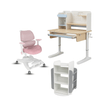
For corporate teams, this matters because productivity is not only about software, meetings, or workflow systems. It is also influenced by how people experience the spaces where they work. For home offices, the same principle applies. A compact BTO study corner, shared dining-table workspace, or dedicated workroom can feel more supportive when it is planned around comfort, reach, posture, and attention.
What to Adjust So Your Workspace Supports Calmer Focus
If your work area keeps pulling your attention away, a few practical adjustments can make it easier for your mind and body to settle.
-
Ensure your chair and desk height are correctly calibrated to allow you to sit comfortably and minimise constant physical shifting.
-
Reduce visual clutter around your main work area so your attention has fewer distractions competing for it.
-
Create separate zones where possible, even in compact Singapore homes, so work, study, and rest do not keep overlapping.
These adjustments do not need to be complicated. The goal is to make the workspace easier to return to, especially when the day involves several small tasks. When the environment supports steadier focus, task switching fatigue becomes easier to manage because the mind has fewer avoidable distractions pulling it away from what needs attention.
This is where Ergoworks’ approach to ergonomic and posture wellness solutions can help make everyday work feel more comfortable and manageable. With solutions designed around comfort, usability, and long-term well-being, Ergoworks helps individuals, families, and workplaces create setups that feel easier to use throughout the day.
Conclusion

A light workday can still feel draining when the mind is asked to shift direction too often without enough time to recover. Each switch may seem minor, but the repeated effort of letting go, refocusing, and carrying unfinished thoughts can quietly build mental strain.
By creating clearer task boundaries, allowing proper pauses, and designing workspaces that support comfort and focus, professionals, students, and families can make everyday work feel less scattered and more sustainable.
Review your current work setup and identify what keeps interrupting your focus, then explore Ergoworks’ ergonomic solutions to create a more comfortable, supportive space for focused work and easier day-to-day resets.



Leave a comment
This site is protected by hCaptcha and the hCaptcha Privacy Policy and Terms of Service apply.