


![Falcon Chair Office Chairs Falcon Chair [Free Footrest Worth $150] Ergoworks](http://ergoworks.com.sg/cdn/shop/files/Falcon_A.png?v=1786502358&width=104)


![Ergoworks Dual Benching Electric Desk [Customizable] Dual Benching Electric Desk Ergoworks](http://ergoworks.com.sg/cdn/shop/files/EW-0223H-2.jpg?v=1778755296&width=104)





![Impact Junior Desk Chair Set Impact Ergonomic Kids Desk & Chair Set [Chair & Length Options Available] Ergoworks](http://ergoworks.com.sg/cdn/shop/files/KidDeskMainImageFinal.png?v=1778618207&width=104)
![Impact Junior Desk Chair Set Impact Ergonomic Kids Desk & Chair Set [Chair & Length Options Available] Ergoworks](http://ergoworks.com.sg/cdn/shop/files/gray_ff76a24f-26d1-469b-b2d5-0013d4a950d7.jpg?v=1785487301&width=104)





Key Takeaways
-
Extended hours of sitting change how the lower back carries weight, concentrating load in ways that gradually influence spinal resilience.
-
Limited movement during desk work reduces the natural compression–decompression cycle that spinal discs rely on to maintain internal balance.
-
When posture remains static, stabilising muscles contribute less, shifting greater demand onto passive structures such as ligaments and discs.
-
Spinal strain often develops quietly over time, which is why proactive workstation design and consistent posture awareness matter more than waiting for discomfort to appear.
Introduction
In Singapore’s desk-bound culture, extended hours at workstations, home offices, and study desks have become routine. For many professionals, students, and even young children, sitting occupies most of the day. Yet the effects of prolonged sitting on the spine are rarely noticeable in the moment. There is no immediate alarm signal. Instead, subtle changes unfold internally, influencing how the spine carries weight, absorbs pressure, and maintains balance through repeated daily exposure.
Understanding what happens inside the body over time is essential for anyone investing in long-term health, productivity, and workplace safety. This is particularly relevant in compact urban homes, corporate environments, and evolving hybrid work arrangements across Singapore.
How Much Sitting is Too Much?
While the spine can tolerate seated posture for periods of focused work, duration and continuity matter. The concern is not sitting itself, but sitting without variation. When posture remains unchanged for extended stretches, spinal load becomes concentrated and recovery opportunities are limited.
As a general guideline, sitting for long uninterrupted periods, such as 60 to 90 minutes at a time, warrants structured movement breaks. Brief intervals of standing, walking, or posture adjustment help redistribute pressure across spinal structures and re-engage supporting muscles. These short resets do not need to be disruptive. Even a few minutes away from the desk can restore circulation, reduce sustained compression, and improve postural awareness.
In Singapore’s office and hybrid work environments, where screen-based tasks often extend beyond traditional office hours, intentional movement becomes part of preventive care. Scheduling breaks between meetings or alternating posture during focused tasks helps prevent continuous loading from becoming habitual. Over the course of a workday, these small adjustments accumulate into meaningful structural relief.
How Sitting for Long Hours Changes the Way the Spine Carries Weight
Sitting may feel like a resting posture, but biomechanically, it remains a load-bearing position. When this posture dominates the day, spinal loading becomes consistent rather than varied, and the body gradually adapts to that consistent loading pattern.
What Continuous Spinal Loading Means for Your Lower Back
During prolonged sitting, compressive force is directed through the pelvis into the lumbar spine. Unlike walking, where weight shifts naturally between structures, seated posture concentrates demand in the lower back. Over time, these effects of long-term spinal load influence how discs and joint surfaces absorb and manage pressure.
Adaptation occurs without immediate warning signs. Continuous compression subtly alters internal stress distribution, shaping how the spine carries weight across months and years. This is why individuals often notice stiffness or a heavy sensation in the lower back after standing up from extended meetings or long periods of desk work.
Why Small Posture Shifts Increase Lumbar Stress Over Time
Even a slight forward lean or relaxed slouching increases the angle of force travelling through the lumbar region. When repeated daily, these small adjustments may contribute to cumulative effects of prolonged sitting that develop gradually rather than suddenly.
For professionals setting up workstations at home or in the office, selecting high-quality, ergonomic office chairs helps maintain neutral pelvic positioning. Consistent support reduces unnecessary stress concentrations and promotes more balanced load distribution.
Why Limited Movement Affects Spinal Disc Pressure Over Time
The spine relies on movement to regulate internal balance. Even minor posture adjustments support fluid exchange within spinal discs. When movement is restricted, that natural cycle slows.
How Reduced Movement Changes Internal Disc Pressure
Spinal discs depend on alternating compression and decompression to maintain hydration and resilience. Maintaining a seated posture for extended periods can reduce natural variation in disc loading, which may affect how discs recover over time.
These shifts do not cause immediate discomfort, but they influence how effectively discs adapt to daily demands. Over time, reduced variation affects the spine’s ability to recover from sustained load. Limited disc recovery may present as stiffness when transitioning from sitting to standing.
What Happens When Discs Do Not Regularly Decompress
When decompression opportunities are limited, loading remains more uniform and less varied than during regular movement. This contributes to broader, prolonged sitting spinal health concerns, particularly in environments where desk work dominates the day.
Alternating between seated and standing positions using a sit-stand desk introduces variation that supports disc recovery and long-term structural balance.
How Static Sitting Shifts Support Away from Muscles
Spinal stability depends on coordinated muscular engagement. When sitting becomes static, the contribution of stabilising muscles gradually changes.
Why Deep Stabilising Muscles Become Less Engaged
Deep trunk muscles are designed to make continuous micro-adjustments that maintain alignment. During extended static sitting, muscular activation reduces. Endurance can decrease over time, and the spine relies less on active support.
This reduction is subtle. It does not immediately affect performance, but it influences how the spine responds to sustained posture. During prolonged desk sessions, this may present as early fatigue in the lower back or difficulty maintaining an upright posture without conscious effort.
What Happens When Ligaments and Discs Take On Greater Demand
With reduced muscular contribution, passive structures such as ligaments and discs assume a greater share of load management. These tissues contribute to spinal stability, but they are not designed to be the primary stabilisers during sustained postures without adequate muscular support. When they take on a disproportionate role over extended periods, internal strain can increase, contributing to prolonged sitting effects.
For children and students, especially during growth phases, supportive setups encourage balanced engagement rather than extended reliance on passive tissues. This is particularly important in study environments where sitting duration can mirror adult work patterns.
What Happens When Small Changes in Spinal Curvature Persist
Postural deviations are rarely dramatic in a single sitting session. They tend to be minor adjustments that feel manageable in the short term but intensify through repeated daily exposure.
How Subtle Curvature Changes Alter Load Distribution
Sustained rounding of the lower back or forward positioning of the head changes how forces travel through spinal segments. Instead of dispersing evenly, stress may concentrate at transitional areas between curves. Across prolonged exposure, these adjustments reinforce the cumulative structural strain linked to prolonged sitting effects.
Why Posture Drift Feels Harmless in the Short Term
The spine adapts gradually, which explains why posture drift often goes unnoticed. Without immediate pain, small deviations are easily sustained. However, long-term repetition shapes how the spine carries load during the day.
A properly adjusted lumbar support chair helps maintain the natural curve of the spine during extended desk sessions. Structured support reduces the likelihood that minor deviations become habitual alignment patterns.
Why Spinal Strain Often Develops Without Early Discomfort
One of the most overlooked aspects of sedentary behaviour is its delayed impact. The spine tolerates gradual stress effectively, allowing internal adjustments to build without immediate warning signs.
Reduced muscular endurance, sustained compression, and altered load distribution converge over time. By the time stiffness or discomfort appears, the underlying effects of prolonged sitting have often been present for years. This explains why individuals frequently associate back discomfort with a recent activity rather than long-standing sitting habits.
For organisations managing workplace health, as well as individuals working remotely in Singapore, prevention depends on consistent ergonomic awareness rather than reactive correction.
Common Signs Prolonged Sitting Is Affecting Your Back
Because structural strain develops gradually, the early indicators are often subtle. They tend to appear as recurring sensations rather than acute pain. Recognising these patterns allows earlier adjustment before discomfort becomes persistent.
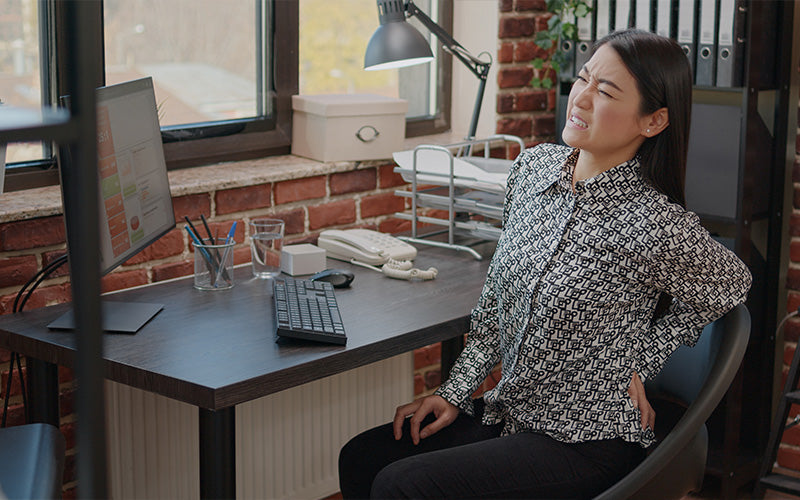
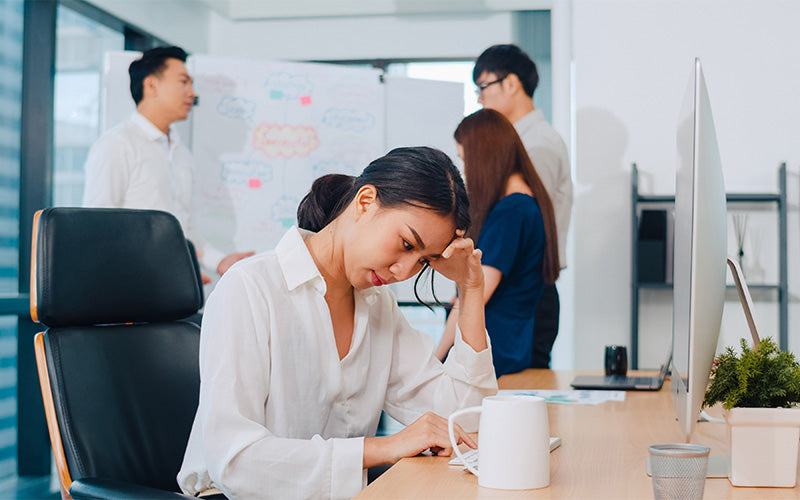
One common sign is stiffness when standing up after prolonged desk work or meetings. The lower back may feel temporarily restricted as spinal structures readjust to upright posture. Some individuals also describe a heavy or fatigued sensation in the lumbar region following extended seated tasks.
Another indicator is reduced tolerance for sitting. You may find it harder to remain comfortable in a chair for the same duration that once felt manageable. This shift reflects changes in muscular endurance and load distribution rather than a single triggering event.
Tightness around the hips or hamstrings can also develop with extended seated positioning. When the hips remain flexed for long periods, surrounding muscle groups may feel shortened or resistant during standing or walking. This does not necessarily indicate injury, but it signals that movement variety has been limited.
If screens are positioned too low, upper back and neck fatigue may become noticeable by the end of the workday. Forward head positioning increases muscular demand in the cervical and upper thoracic regions, contributing to end-of-day tiredness rather than sharp discomfort.
These signs are not dramatic, but they reflect how sustained posture influences the body over time. Adjusting workstation setup and incorporating structured movement intervals can help restore balance before strain becomes more established.
Conclusion

Prolonged sitting rarely feels demanding at the moment. Yet internally, the spine responds to continuous loading, limited movement, and subtle posture drift. These progressive adaptations influence resilience long before discomfort becomes noticeable.
As a Singapore-based pioneer in holistic ergonomic and posture wellness solutions, Ergoworks advocates science-informed workstation design that supports spinal health in a preventive manner. If you are reviewing your home or workplace setup, consider arranging an ergonomic assessment or consultation with Ergoworks to evaluate how your current seating and desk configuration may be influencing your spinal health over time.

Leave a comment
This site is protected by hCaptcha and the hCaptcha Privacy Policy and Terms of Service apply.