


![Falcon Chair Office Chairs Falcon Chair [Free Footrest Worth $150] Ergoworks](http://ergoworks.com.sg/cdn/shop/files/Falcon_A.png?v=1786502358&width=104)


![Ergoworks Dual Benching Electric Desk [Customizable] Dual Benching Electric Desk Ergoworks](http://ergoworks.com.sg/cdn/shop/files/EW-0223H-2.jpg?v=1778755296&width=104)





![Impact Junior Desk Chair Set Impact Ergonomic Kids Desk & Chair Set [Chair & Length Options Available] Ergoworks](http://ergoworks.com.sg/cdn/shop/files/KidDeskMainImageFinal.png?v=1778618207&width=104)
![Impact Junior Desk Chair Set Impact Ergonomic Kids Desk & Chair Set [Chair & Length Options Available] Ergoworks](http://ergoworks.com.sg/cdn/shop/files/gray_ff76a24f-26d1-469b-b2d5-0013d4a950d7.jpg?v=1785487301&width=104)








Introduction
Many children can appear calm and focused during long study sessions, even when their bodies are quietly adjusting to discomfort. A child may sit still, continue writing, or complete homework without complaint, but this does not always mean the setup feels comfortable or supportive.
Over time, quiet focus can be mistaken for ease. When a child repeatedly studies in the same position, at the same table, or on a chair that does not suit their body well, they may begin to treat small aches, fidgeting, leaning, or tiredness as part of the normal studying experience. These signs may be subtle, especially in Singapore households where academic routines often begin early and study time can be structured around schoolwork, tuition, revision, and screen-based learning.
This is why a child’s study environment matters beyond concentration alone. It can influence how physical sensations are noticed, ignored, or accepted over time. Repetition, more than intensity, often shapes what studying is expected to feel like on a daily basis. When the same conditions are experienced again and again, discomfort may gradually become familiar rather than unusual.
For parents, the goal is not to overanalyse every posture or movement. It is to become more aware of how daily learning spaces may shape a child’s comfort, attention, and body awareness. A supportive setup helps children recognise that studying does not have to feel strained, stiff, or tiring by default.
Key Takeaways
- Hidden Strain: Children can appear focused and settled even when their bodies are quietly adapting to strain, making discomfort harder to recognise early on.
- Familiarity Masks Discomfort: Repeated study habits shape what feels normal over time, meaning small physical issues may be accepted rather than questioned.
- Automatic Adaptation: Behaviour during learning often adapts to physical conditions automatically, with posture and movement patterns forming without conscious awareness.
- Proactive Reviews: Regularly reviewing a child’s learning space helps ensure it continues to support comfort, awareness, and sustained focus as academic demands grow.

How a Study Environment Shapes Perception Before Awareness Develops
Before children can clearly explain what feels uncomfortable, they often rely on habit, familiarity, and task completion as their main reference points. This section looks at how repeated study conditions can shape what the body learns to tolerate, why discomfort may go unnamed, and how parents can recognise subtle signals before they become part of a child’s everyday learning routine.
How Consistent Study Conditions Can Reduce Sensitivity to Ongoing Physical Signals
When children study in the same setup every day, their bodies may gradually become used to the same physical inputs. This does not mean discomfort has disappeared. It may simply mean the sensation has become familiar enough that it no longer receives much attention. In a home study environment, repeated cues such as chair height, desk position, lighting, and screen distance can quietly shape what the body learns to accept as normal.
Children naturally pay less attention to sensations they experience repeatedly, especially when their focus is on finishing homework or keeping up with a task. For example, a child may initially notice that a chair feels too deep, a table feels too high, or their feet do not rest comfortably. However, if these conditions remain the same and do not stop them from finishing homework, the brain may start treating those signals as background information rather than something that needs attention.
This process can be especially subtle in children because they may not yet have the vocabulary or self-awareness to describe what feels “off”. Sensory adaptation in children can happen without conscious comparison, meaning a child may not realise that their body is adjusting to strain unless the discomfort becomes more obvious. A quiet, orderly, and visually pleasant study environment can still coincide with reduced bodily awareness if the setup repeatedly encourages awkward sitting, reaching, leaning, or tensing.
Why Discomfort Is Often Unnamed Even When It Is Present
During focused study, children are usually trying to complete a task, answer questions correctly, or keep up with school expectations. Their attention naturally goes toward the worksheet, textbook, online lesson, or revision task in front of them. Because of this, mild physical feedback may not feel important enough to interrupt their concentration.
This is one reason discomfort often remains unnamed. A child may not say, “My neck is strained,” or “My wrist feels tired.” Instead, they may stretch often, shift around, lean forward, rest their head on one hand, or lose focus near the end of the session. In many Singapore homes, where schoolwork, tuition assignments, and digital learning can take place across the week, these signs may be seen as tiredness rather than feedback from the study environment.
Silence is also commonly mistaken for comfort. If a child completes their homework without complaint, parents may naturally assume the setup is suitable. However, endurance is not always the same as ease. Some children are able to continue studying despite low-level strain, especially when they are motivated, disciplined, or used to pushing through. Over time, this can shape a form of habitual comfort perception, where familiar discomfort is no longer questioned because it feels like part of studying.

How Early Study Experiences Become the Reference Point for “Normal” Sensation
Children often build their earliest ideas of comfort through repeated experience rather than deliberate assessment. If they have always studied at a table that is too tall, sat on a chair that does not support their feet, or leaned toward a screen placed too low, these sensations can become linked with concentration, effort, and academic seriousness. The body learns from repetition, even when the child is not actively thinking about it.
This matters because early patterns can become the reference point for later comparison. A child who has spent years in the same study environment may judge future setups based on familiarity rather than actual physical ease. Something may feel “normal” simply because it resembles what they have always known, even if it encourages unnecessary strain during longer study periods.
These interpretations are rarely revisited unless something changes. As children move through primary school and into more demanding academic stages, study duration often increases. There may be more written work, longer reading sessions, laptop use, online lessons, and exam preparation. If the physical setup remains unchanged while the demands grow, a once-manageable arrangement may become less supportive without parents noticing immediately.
Who Is Most Affected by Subtle Study Environment Signals
Children who spend extended periods studying in the same physical setup are more likely to adapt to recurring sensations rather than notice them. This is especially true when the setup is used daily and there is little variation between homework, tuition revision, reading, and screen-based learning. In a fixed study environment, repeated exposure increases familiarity, making small physical cues less noticeable even as study demands become heavier.
Students who begin using a dedicated workstation at a young age may also form their earliest comfort references within that space. This can be helpful when the setup is well-matched to their size and routines, but less helpful when the child quickly outgrows the chair, desk, or layout. Since children vary in height, growth rate, and learning habits, the same arrangement may not continue to support them across different stages.
In smaller Singapore homes, where a child may alternate between a bedroom desk, dining table, or shared study corner, these small setup differences can also affect how comfortably they settle into daily work.
Learners who are highly focused can also be more affected than parents expect. A child who is engaged in reading, writing, or online learning may register cognitive effort more strongly than bodily feedback. This is why home study routines should be observed over time, not just during one productive session. If a child consistently leans forward, raises their shoulders, twists their body, or avoids sitting for long, those patterns may reveal more than a simple comment about comfort.
How Can Parents Recognise Whether a Study Setup Supports Comfort Over Time
Parents can start by looking for patterns that appear after repeated use. Subtle signs such as neck tension, wrist fatigue, numbness, shoulder tightness, restless shifting, or general end-of-day discomfort may emerge gradually rather than immediately. These sensations may not stop a child from studying, but they can suggest that the study environment is asking the body to work harder than necessary.

The relationship between desk height, screen position, lighting, leg support, and chair adjustability also matters. When these elements are not well-aligned, children may compensate without realising it. For instance, they may hunch forward to see better, perch at the edge of the seat, curl their feet under the chair, or raise their shoulders while writing. Over time, these small adjustments can affect long-term physical awareness, especially if the child begins to see strain as part of ordinary study.
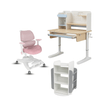
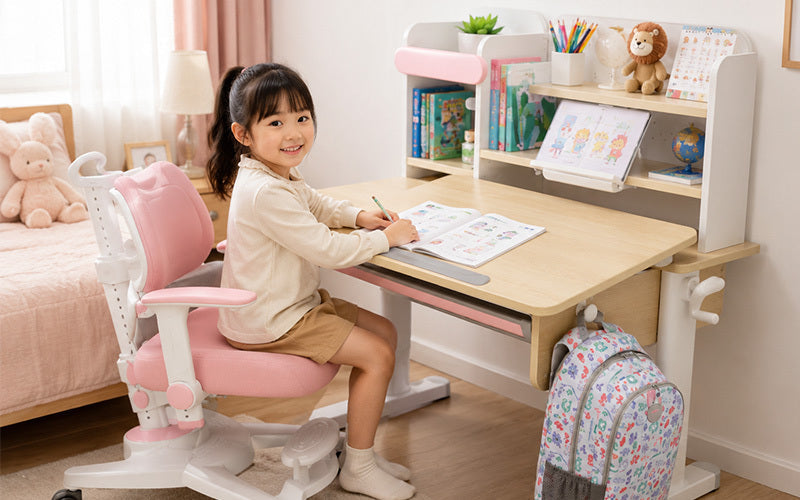
Because children grow quickly, parents may also need to reassess whether a once-suitable setup still fits. A chair that worked last year may no longer support the child’s posture well. A desk that seemed appropriate in lower primary may feel awkward as written work increases. This is where a properly sized kids table and chair set can be considered based on the child’s age, body size, and daily learning habits, especially if the current setup no longer supports comfortable sitting and natural movement.

Rather than focusing only on whether a child looks settled in the moment, it is more useful to observe how comfort is experienced across weeks and months. A supportive setup should allow the child to study with less unnecessary effort, move naturally, and recognise when something feels uncomfortable. In this sense, a good study environment does more than support task completion. It helps children learn that comfort, attention, and body awareness can grow together.
Why Study Environment Influences Behaviour Without Conscious Awareness
A child’s learning behaviour is not shaped only by motivation, discipline, or reminders from adults. It is also shaped by the physical cues they experience every day. When the same chair, desk height, screen position, or sitting pattern is repeated often enough, the body may begin to respond automatically. This section explores how physical conditions can influence behaviour quietly, and why supportive adjustments can help children stay more aware of comfort as their learning needs grow.
Why Children’s Study Behaviour Aligns With Physical Conditions Automatically
Children often adjust their behaviour to fit the space around them before they can explain why they are doing it. If a chair feels slightly too low, they may raise their shoulders while writing. If the table is too high, they may lean forward or tense their arms. If their feet do not reach the floor, they may tuck their legs under the chair or keep shifting position. These adjustments may look like habits, but they are often practical responses to repeated physical constraints.
Over time, stillness, endurance, and limited movement can become familiar through exposure. A child may learn to sit in one fixed position because the setup does not make natural movement easy. They may also begin to associate “sitting properly” with staying still for long periods, even when small movements would help them feel more comfortable. This is one way a study environment can influence behaviour without the child making a deliberate choice.
Verbal reminders alone may not be enough if the physical setup continues to encourage the same posture. A parent may remind a child to sit upright, but if the desk, chair, or screen position does not suit the child’s size and task, the body will often return to the easiest available position. This is why investing in ergonomic furniture is better understood as long-term support rather than short-term correction. The aim is not to force perfect posture, but to create conditions that make healthier sitting patterns easier to maintain.
What Study Environments Communicate Through Repetition Rather Than Words
A physical setup can communicate expectations even when no one says them out loud. A fixed chair and desk may quietly suggest how long a child should sit, how much they should move, and what kind of effort is expected during homework or revision. If movement feels inconvenient, restricted, or disruptive, the child may gradually learn to stay still even when their body needs a change in position.
This is where environmental conditioning in learning becomes useful to understand. Children do not only respond to instructions. They also respond to repeated cues from the spaces they use every day. A desk that encourages leaning, a chair that does not support the feet, or a screen that requires the child to look down for long periods can gradually shape what studying feels like. When these conditions are repeated during schoolwork, tuition assignments, and online lessons, they may become part of the child’s idea of “normal” study behaviour.
The same principle applies when parents choose practical home learning setups. A well-matched desk and chair can support better alignment when it is selected according to the child’s size, habits, and daily tasks rather than appearance alone. The goal is not to create a rigid or overly formal study space, but to reduce the amount of unnecessary physical compensation the child has to make while learning.
These signals persist because many children in Singapore return to the same study corner after school, on weekends, and during exam periods. If the setup repeatedly links strain with productivity, the child may learn to tolerate discomfort quietly. If the setup supports comfort and appropriate movement, the child is more likely to associate focused study with ease, steadiness, and better body awareness.
How Supportive Environments Preserve Sensitivity to Physical Feedback
Supportive setups help children notice physical feedback before it becomes distracting. When the body is not constantly compensating for awkward height, poor reach, or limited movement, children may be better able to distinguish between normal effort and unnecessary strain. This does not mean they will never feel tired while studying. It means the study environment is less likely to make tiredness feel like the default condition.
Variation also matters. A setup that allows small posture changes, proper foot support, and a comfortable reach can help keep sensory awareness more active. Uniform exposure to the same strained position reduces contrast, which makes discomfort harder to detect. When children have enough support to sit, write, read, and use screens with less effort, they may be more likely to notice when something starts to feel uncomfortable.
For families reviewing a child’s learning area, it may help to assess one element at a time. A parent may first look at whether ergonomic chairs for home provide enough adjustability for the child’s height and sitting habits. Another family may compare different study table for kids options with the child’s current desk to see whether the height, depth, and workspace are suitable for daily use. If written work and screen-based learning take up longer hours, an ergonomic study table setup may also be worth considering for better alignment across different tasks.
This matters more as academic demands increase. Longer study sessions, heavier workloads, and more screen-based learning can make small setup issues more noticeable over time. When sensitivity to physical feedback is preserved, children have a better chance of recognising discomfort early, adjusting their position, and understanding that studying should not always require pushing through strain. This reflects Ergoworks’ preventive, long-term view of comfort and ergonomic support, where the learning space grows with the child rather than simply expecting the child to adapt to the space.
Questions You Might Ask
1. If My Child Never Complains, Does That Indicate Comfort?
Silence is more often a sign of familiarity than of true comfort. Children tend to adapt quickly to repeated conditions, especially when discomfort develops gradually rather than abruptly. When a study environment feels consistent day after day, physical sensations that might otherwise draw attention can fade into the background. As a result, the absence of complaints does not necessarily reflect suitability, but rather how accustomed the child has become to the environment they are studying in.
2. Can Discomfort Really Become Part Of What Feels Normal?
Yes. Perception is shaped through repeated exposure long before conscious evaluation develops. When similar physical sensations occur consistently during study, they begin to carry meaning through association rather than assessment. Over time, these sensations are interpreted as part of the expected experience of studying. Because this process unfolds gradually, discomfort does not stand out as something unusual or worth questioning.
3. How Does Ergoworks Approach Children’s Study Environments Differently?
Ergoworks looks at a child’s study environment as part of long-term comfort support, not only as a response to visible discomfort. Rather than waiting until a child complains of strain, the focus is on how repeated sitting, writing, and screen habits can shape what feels normal over time. This allows parents to consider comfort earlier, especially as children grow and their daily learning routines become more demanding.
4. Do Ergonomic Chairs Work For Everyone?
Ergonomic chairs are designed to accommodate a range of body types and usage patterns, but no single chair suits every individual equally. Comfort and support depend on how well a chair’s features align with the user’s size, movement habits, and duration of use. Because children differ widely in growth stages and study behaviour, the effectiveness of an ergonomic chair is influenced by how well it responds to these variations over time rather than by its label alone.
5. Is Expensive Furniture Always More Ergonomic?
Cost does not automatically determine ergonomic suitability. While higher-priced furniture may offer better materials, durability, or a wider range of adjustments, these features only contribute to comfort if they align with the user’s needs and daily routines. In the context of children’s study environments, ergonomic value is shaped more by appropriateness and adaptability over time than by price alone.
Conclusion

A child’s study environment plays a quiet but lasting role in shaping how physical sensations are understood over time. When the same setup is used repeatedly, familiar discomfort may become easier to ignore, especially if it does not immediately interrupt homework, revision, or online learning. This is why comfort should not be judged only by whether a child looks settled in the moment.
For parents, the more useful question is whether the setup continues to support the child as their body, routines, and academic demands change. Early study spaces can influence what children come to accept as normal long before discomfort becomes visible or disruptive. By paying attention to small patterns such as leaning, fidgeting, shoulder tension, or end-of-day tiredness, parents can better understand whether the study environment is supporting both focus and physical awareness.
Ergoworks approaches children’s ergonomics through thoughtful design, adjustability, and long-term comfort support rather than short-term correction. With a setup that fits the child more naturally, studying can feel less like something the body has to endure and more like a routine that supports steady learning.
To explore study solutions that better fit your child’s growth, comfort, and daily learning habits, visit Ergoworks and find a setup that helps make everyday studying feel more supported from the start.



Leave a comment
This site is protected by hCaptcha and the hCaptcha Privacy Policy and Terms of Service apply.