


![Falcon Chair Office Chairs Falcon Chair [Free Footrest Worth $150] Ergoworks](http://ergoworks.com.sg/cdn/shop/files/Falcon_A.png?v=1786502358&width=104)



![Ergoworks Dual Benching Electric Desk [Customizable] Dual Benching Electric Desk Ergoworks](http://ergoworks.com.sg/cdn/shop/files/EW-0223H-2.jpg?v=1778755296&width=104)





![Impact Junior Desk Chair Set Impact Ergonomic Kids Desk & Chair Set [Chair & Length Options Available] Ergoworks](http://ergoworks.com.sg/cdn/shop/files/KidDeskMainImageFinal.png?v=1778618207&width=104)
![Impact Junior Desk Chair Set Impact Ergonomic Kids Desk & Chair Set [Chair & Length Options Available] Ergoworks](http://ergoworks.com.sg/cdn/shop/files/gray_ff76a24f-26d1-469b-b2d5-0013d4a950d7.jpg?v=1785487301&width=104)







Key Takeaways
-
Subtle changes in posture often appear before any clear discomfort, making early awareness more useful than waiting for pain to signal a problem.
-
Frequent shifting, repositioning, or adjusting your posture are early signs that your seating may not be providing consistent support.
-
Avoiding certain parts of your chair, such as the backrest or seat centre, reflects how the body compensates for uneven pressure or lack of support.
-
Recognising these patterns early allows you to make timely adjustments to your setup, supporting more stable, comfortable, and sustainable sitting habits over time.
Introduction
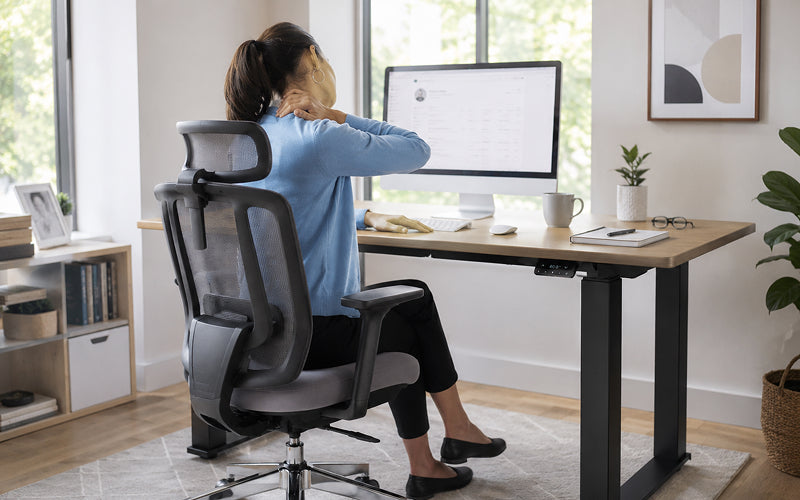
In many modern workspaces across Singapore, long hours at a desk have become part of daily life. Think about the last ten minutes. Have you crossed and uncrossed your legs, leaned on your elbow, or adjusted your lumbar support? If you have repositioned more than twice, you may already be in a “fidget cycle”, where your body keeps looking for short-term relief from an uncomfortable office chair.
While seating discomfort rarely causes immediate pain, it can influence how you sit in subtle ways that are easy to overlook. These quiet shifts in posture and movement often develop before any clear discomfort is felt.
Recognising these early changes is important. When small adjustments become repeated habits, sitting patterns may have already changed in ways that are harder to correct by the time pain becomes noticeable. Paying attention to how your body responds early allows you to make more informed decisions about your workspace and maintain better long-term comfort.
How Micro-Adjustments Begin As Subtle Relief-Seeking Movements
Early discomfort is often met with small, unconscious movements. These micro-adjustments, while seated, include shifting weight, sliding forward, or repositioning your legs to ease pressure. Because these actions feel minor, they are rarely questioned, even as they occur more frequently throughout the day.
When an uncomfortable office chair is the cause, these movements are not random. They reflect the body’s attempt to reduce strain caused by uneven or insufficient support. This is often noticeable during long periods of focused work, such as extended screen time or back-to-back meetings, where staying still begins to feel difficult.
A practical way to respond is to observe how often you adjust your position during work. If staying still feels difficult, it may be a sign that your chair is not supporting your posture effectively. Reviewing your setup, including seat height and backrest alignment, can help. When adjustments are limited, switching to a more supportive ergonomic office chair allows the body to settle into a position that feels natural and sustainable.
Why Repeated Adjustments Gradually Replace Stable Sitting
As discomfort continues, the body begins to rely on sitting behaviour adaptation rather than maintaining a consistent posture. Instead of remaining comfortably seated, you may find yourself rotating between positions that only feel manageable for short periods.
With an uncomfortable office chair, this pattern develops gradually. Stability is replaced by ongoing repositioning, not because movement is preferred, but because no single position provides adequate support. This can affect both comfort and concentration, especially during sustained desk-based work or prolonged computer use.
To restore stability, it is important to focus on seating that supports the body consistently. Chairs designed with proper lumbar support and adjustability help maintain a balanced posture over time. Choosing high-quality ergonomic office chairs supports longer periods of seated work with fewer interruptions.
|
If you are... |
It likely means your chair... |
The Ergoworks Reset |
|
Sliding your hips forward |
Has a seat pan that is too deep. |
Adjust seat depth or use a backrest. |
|
Leaning to one side |
Has uneven cushion density. |
Upgrade to a high-quality office chair. |
|
Shrugging your shoulders |
Has armrests that are too high/fixed. |
Lower armrests to a 90° elbow angle. |
|
"Perching" on the edge |
Has a backrest that doesn't fit your curve. |
Engage the lumbar support fully. |
What Avoidance Of Certain Contact Points Reveals About Chair Comfort
Another early sign of poor support is the gradual avoidance of certain parts of the chair. You may notice that you no longer lean fully into the backrest or that your weight shifts away from the centre of the seat. This pattern, known as a chair discomfort response, develops quietly and often without conscious awareness.
When these patterns begin to appear, it indicates that support is not evenly distributed. Over time, this can create imbalances, as certain areas of the body carry more strain than others.
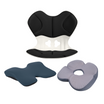
Improving this starts with ensuring that your chair allows for full, comfortable contact across key support areas. The backrest should support the natural curve of your spine, while the seat should distribute weight evenly. In some cases, adding an ergonomic pillow can provide targeted support and help restore a more balanced sitting position.
How Behaviour Adapts Before Discomfort Is Fully Recognised
One of the most overlooked aspects of seating discomfort is how gradually it develops. With an uncomfortable office chair, the body adapts first, while awareness comes later. These changes in how you sit can feel natural, even when they are no longer supportive.
As a result, it can be difficult to identify when a chair is no longer suitable. By the time discomfort becomes noticeable, the adapted sitting habits may already feel familiar and harder to change.
To stay ahead of this, it helps to check in with your posture throughout the day. Noticing whether you are sitting comfortably or frequently adjusting can provide useful insight into whether your current setup is supporting you as it should. Making small adjustments early, such as correcting seat height or back support, can prevent these habits from becoming more difficult to reverse.
Why Early Sitting Patterns Matter More Than Pain Signals
The way you sit before pain appears often reveals more about your chair than discomfort itself. Frequent shifting, uneven contact, and difficulty maintaining a consistent posture are signs that the body is compensating rather than being supported.
In Singapore’s work culture, where long hours at a desk are common, these early signals should not be overlooked. An uncomfortable office chair may seem manageable at first, but the habits it creates can affect long-term comfort if left unaddressed.
Recognising these patterns early allows you to take practical steps to improve your setup, helping you maintain a more balanced and sustainable way of sitting. This is where a more considered approach to ergonomic support becomes important. Solutions developed with posture, movement, and daily use in mind can better support more consistent and natural sitting habits during daily work
As a provider of ergonomic and posture wellness solutions in Singapore, Ergoworks focuses on helping individuals identify these early signs and match them with seating setups that promote consistent and well-balanced sitting habits across different work environments.
Conclusion

The absence of pain does not always mean that your seating is suitable. Subtle changes in how you sit are often the first indication that your chair is not providing the support your body needs. By recognising these early patterns and making timely adjustments, you can maintain better posture and more consistent comfort throughout your workday.
Your body may already be giving you the signals, so it is worth listening before small adjustments become harder to ignore. If you have noticed yourself shifting, readjusting, or struggling to stay in one position throughout the day, these patterns may be early signs that your chair is not providing the support your body needs. Visit the Ergoworks showroom at Marina Square to experience what a high-quality office chair ergonomic setup can feel like from the moment you sit down. Let Ergoworks specialists help you find a fit that supports your daily routine, sitting habits, and long-term comfort.


Leave a comment
This site is protected by hCaptcha and the hCaptcha Privacy Policy and Terms of Service apply.