


![Falcon Chair Office Chairs Falcon Chair [Free Footrest Worth $150] Ergoworks](http://ergoworks.com.sg/cdn/shop/files/Falcon_A.png?v=1786502358&width=104)


![Ergoworks Dual Benching Electric Desk [Customizable] Dual Benching Electric Desk Ergoworks](http://ergoworks.com.sg/cdn/shop/files/EW-0223H-2.jpg?v=1778755296&width=104)





![Impact Junior Desk Chair Set Impact Ergonomic Kids Desk & Chair Set [Chair & Length Options Available] Ergoworks](http://ergoworks.com.sg/cdn/shop/files/KidDeskMainImageFinal.png?v=1778618207&width=104)
![Impact Junior Desk Chair Set Impact Ergonomic Kids Desk & Chair Set [Chair & Length Options Available] Ergoworks](http://ergoworks.com.sg/cdn/shop/files/gray_ff76a24f-26d1-469b-b2d5-0013d4a950d7.jpg?v=1785487301&width=104)






Key Takeaways
-
Strength and flexibility help with movement, but they do not always determine how at ease the body feels during long hours of sitting, studying, working, or resting.
-
Daily ease is shaped by repeated conditions such as seat height, desk level, backrest fit, screen position, and how long the body stays in one setting.
-
Uneven pressure can make your body shift, lean, or tense without you noticing. This is why a well-matched setup should help your body stay settled with less effort.
-
Reviewing work, study, and home setups early can help prevent small discomforts from becoming accepted as part of daily routines, especially for Singapore professionals, students, and families.
Introduction
Many people associate physical ease with being strong, flexible, or active. Someone who exercises regularly, stretches often, or moves well may seem unlikely to feel discomfort during ordinary routines. Yet, you might smash an intense morning gym session or a yoga class, only to find yourself slouching, fidgeting, and nursing a dull lower back ache just two hours into your desk job. Yet daily comfort is not only about what the body can do during movement. It is also shaped by how the body is supported when movement is minimal, such as while sitting at a desk, studying at home, attending meetings, or working through long hours in a shared office.
For working adults, parents choosing study setups for children, and homeowners planning practical spaces in Singapore, the question of what physical comfort is goes beyond strength or flexibility. Comfort reflects how the body responds to repeated positions, pressure, surface height, and support throughout the day. A strong body can still feel unsettled when a chair, desk, or workspace requires quiet compensation throughout the day. Understanding this helps people make better everyday choices instead of waiting until discomfort becomes part of the routine.
How Physical Comfort Is Shaped By Sustained Daily Conditions
The definition of physical comfort becomes clearer when viewed through everyday duration, rather than short moments of activity. A person may feel fine while walking, exercising, or standing briefly, yet feel tired after sitting through a full workday because the body has been holding the same position for too long. In Singapore, this is especially relevant for home offices, compact study corners, and corporate workstations where people may spend hours in one setting. In this context, understanding what physical comfort is helps clarify that it is not just the absence of pain, but the ability to remain supported without constantly shifting, leaning, or bracing the body.
Sustained conditions matter because small mismatches can build gradually. A seat that feels acceptable for ten minutes may not remain comfortable after several hours if it does not suit the user’s height, posture habits, or work surface. A clearer solution is to assess the full setup, including seat depth, back support, desk height, screen position, and how often the user changes posture through the day. This makes daily ease feel more naturally supported by the setup, rather than something the body has to keep working to maintain.
Why Strength And Flexibility Do Not Guarantee Comfort
Strength and flexibility describe what the body can manage during movement, while comfort describes how the body feels when it is expected to stay steady. A person may have strong muscles and good mobility, but still feel strain when seated for long periods if the body is not supported in a balanced way. This is why physical comfort should not be judged only by what the body can do through strength or flexibility. It depends on how easily the body can stay at ease during low-effort tasks.
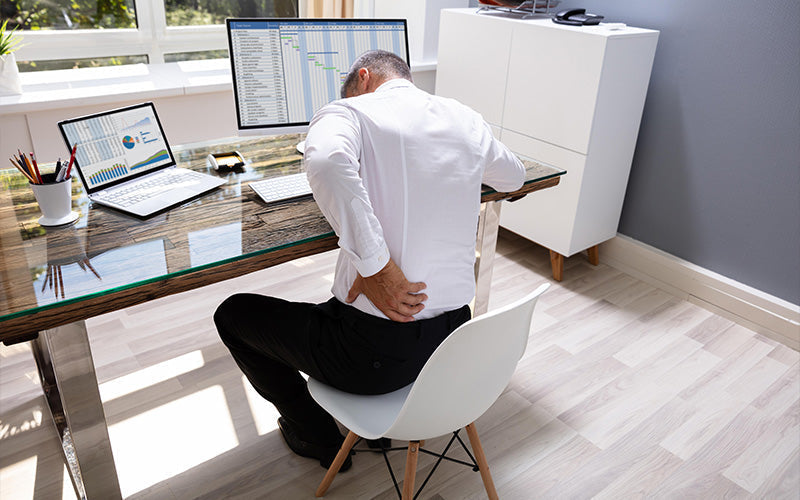
For working professionals, the issue may appear as restlessness during calls, shoulder tension during laptop work, or lower back fatigue after long hours of seated concentration. For students, it may show as slouching, leaning over worksheets, or needing frequent posture changes during homework.
The practical solution is not to rely only on stretching or exercise, but to pair healthy movement habits with a work or study setup that reduces unnecessary effort during stillness. Movement ability helps the body perform a task, but daily comfort depends on how much ease the body can maintain between those tasks. This is where transitioning to a premium ergonomic seating solution can support the body more consistently during long everyday routines.
|
Physical Attribute |
The Common Misconception |
The Reality of Desk Stillness |
The Ergoworks Strategy |
|
High Muscular Strength |
"A strong core will automatically prevent me from slouching at my desk." |
Core muscles inevitably fatigue under static loads; a strong back still collapses without external bracing. |
Use a chair with dynamic lumbar tracking. |
|
Excellent Flexibility |
"Frequent stretching completely undoes the strain of long sitting sessions." |
Flexibility does not stop localised pressure concentration on the tailbone or thighs while seated. |
Ensure even pressure distribution through a properly adjusted desk-and-chair setup. |
|
Active Lifestyle |
"Hitting the gym daily compensates for an 8-hour sitting routine." |
The "active couch potato" effect—localised muscle guarding occurs during stillness regardless of baseline fitness. |
Choose supportive furnishings that help protect your posture throughout the workday. |
What Role Support And Pressure Distribution Play In Physical Comfort
Body support and comfort are closely linked because the body tends to feel more at ease when pressure is spread evenly instead of concentrated in one area. When a chair, desk, or surface does not support the body well, certain parts may carry more load than they should. Over time, the user may begin shifting forward, crossing the legs, leaning on one elbow, or raising the shoulders without noticing. These small adjustments are not always harmful on their own, but they often signal that the setup is not helping the body settle comfortably.
What Poor Support Looks Like In Everyday Setups

In daily routines, poor support often shows up through small posture changes that feel normal at first but become tiring when repeated for hours.
Common Signs May Include:
-
Shoulders lifting because the table is too high
-
Feet dangling because the seat height does not suit the user
-
The lower back losing support during prolonged sitting
-
Arms resting awkwardly while typing, writing, or using a mouse
These signs do not mean that the person is sitting “wrong” all the time. More often, they show that the setup is asking the body to make quiet adjustments to stay comfortable. From this angle, understanding what physical comfort is means asking whether the body can sit, work, read, or study without repeated corrections just to feel settled.
In Singapore homes, where dining tables, study desks, and compact workstations may serve multiple purposes, this matters because furniture that works for short use may not provide enough support for full-day routines.
How Even Support Helps Spread Pressure More Comfortably
When support is spread more evenly across the body, sitting can feel steadier because no single area has to carry too much pressure for too long. For modern homes, investing in a properly matched ergonomic table and chair ecosystem ensures that the feet rest flat, the back feels supported, and the arms work without being lifted or compressed for long periods. This creates a steadier foundation for daily tasks, whether someone is working through emails, attending video calls, helping a child with homework, or spending focused time at a desk. Better pressure distribution does not force the body into one fixed posture. Instead, it makes healthy changes in position easier because the body starts from a more supported place.
How Environmental Consistency Influences Comfort Over Time
The factors affecting physical comfort often include more than a single chair or desk. Comfort can be influenced by how consistent support feels across the day, from the office chair to the home workstation, dining seat, study desk, or shared hot-desking arrangement. Frequent changes in seat height, table level, back support, or screen position can make the body adapt repeatedly. While each setting may feel manageable for a short while, the combined effect can reduce ease by the end of the day.
Seen this way, understanding what physical comfort is means looking at continuity, not perfection. The goal is not to keep the body fixed in one ideal posture, but to create dependable support that makes comfortable movement easier.
This is especially useful for hybrid workers, children who alternate between school and home learning, and families furnishing a new BTO or resale flat. For Singapore homes, choosing versatile ergonomic furniture that fits the available space helps create a more reliable foundation, ensuring your skeletal system doesn't have to continuously adapt to sub-optimal setups.
Why Physical Comfort Should Be Viewed As A Preventive Health Signal At Ergoworks

At Ergoworks, physical comfort can be viewed as an early sign of whether a daily environment is suitable for the body over long periods. This does not mean every moment of discomfort points to a serious problem, but it does mean recurring unease should not be dismissed as something normal to tolerate. When a person repeatedly feels the need to stretch, shift, lean, or leave the seat just to regain ease, the setup may be asking the body to work harder than necessary.
A more helpful response is to review the environment before discomfort becomes deeply familiar. For office employees, this may involve checking workstation height, chair support, and task habits. For parents, it may mean choosing study furniture that grows with the child’s needs instead of treating posture as an afterthought.
For companies, it may involve supporting staff with workspaces that feel practical, adjustable, and sustainable across different users. This preventive approach makes comfort easier to manage because it addresses daily causes, not only the discomfort that appears after prolonged use.
Conclusion
Understanding daily comfort helps shift the focus from short-term physical ability to long-term support. Strength and flexibility remain valuable, but they do not replace the need for a setup that helps the body remain at ease during work, study, rest, and concentration.
In Singapore, where many people spend long hours at desks, work from compact home spaces, or share furniture across family members, comfort should be considered part of everyday planning rather than an afterthought. A well-supported environment can reduce unnecessary strain, encourage better posture habits, and make daily routines feel more manageable over time.
Visit Ergoworks to find an ergonomic setup that fits the way you work, study, and live each day. Our team can guide you through suitable seating, desk, and posture-friendly solutions that help your daily environment feel more comfortable over time.


Leave a comment
This site is protected by hCaptcha and the hCaptcha Privacy Policy and Terms of Service apply.