


![Falcon Chair Office Chairs Falcon Chair [Free Footrest Worth $150] Ergoworks](http://ergoworks.com.sg/cdn/shop/files/Falcon_A.png?v=1786502358&width=104)


![Ergoworks Dual Benching Electric Desk [Customizable] Dual Benching Electric Desk Ergoworks](http://ergoworks.com.sg/cdn/shop/files/EW-0223H-2.jpg?v=1778755296&width=104)





![Impact Junior Desk Chair Set Impact Ergonomic Kids Desk & Chair Set [Chair & Length Options Available] Ergoworks](http://ergoworks.com.sg/cdn/shop/files/KidDeskMainImageFinal.png?v=1778618207&width=104)
![Impact Junior Desk Chair Set Impact Ergonomic Kids Desk & Chair Set [Chair & Length Options Available] Ergoworks](http://ergoworks.com.sg/cdn/shop/files/gray_ff76a24f-26d1-469b-b2d5-0013d4a950d7.jpg?v=1785487301&width=104)





Introduction
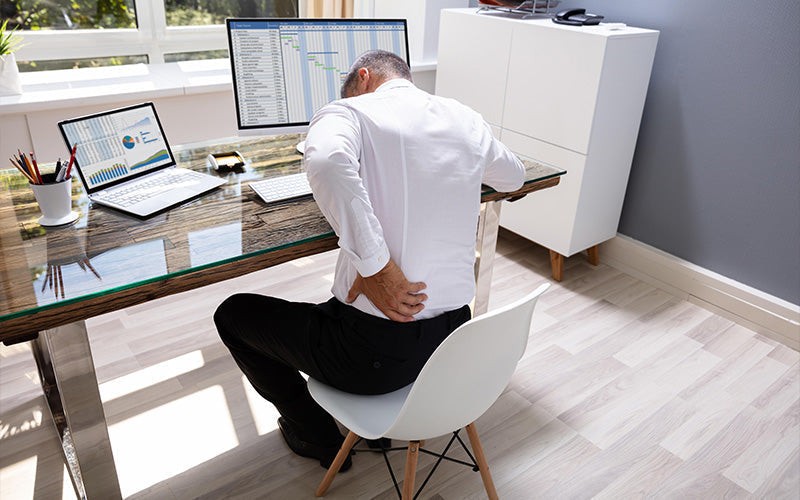
Many people expect physical problems to announce themselves through discomfort. A sore back, aching shoulders, or a stiff neck are often viewed as warning signs that something is wrong. Yet physical exhaustion from work frequently develops without any of these obvious indicators.
This is one reason why it can go unnoticed for months or even years. A person may continue to meet deadlines, attend meetings, and carry out daily responsibilities while feeling increasingly drained. Because there is no clear injury or painful event to point to, the growing fatigue is often attributed to age, stress, lack of sleep, or simply the demands of modern life.
The body is remarkably good at adapting. When support is lacking or posture becomes inefficient, muscles often compensate automatically. These compensations allow work to continue, but they also require energy. Over time, that energy demand accumulates.
Some working adults believe that tiredness is primarily a mental issue. While mental fatigue certainly plays a role, physical exhaustion from work can develop independently of emotional stress. Someone may feel motivated, focused, and engaged in their role while still experiencing significant physical depletion by the end of the day.
Another challenge is that the body does not always communicate excessive effort through pain. Instead, it may respond with reduced stamina, slower recovery, feelings of heaviness, or persistent tiredness that seems difficult to explain. When these signs become normalised, the underlying causes often remain unaddressed.
Understanding how work-related physical exhaustion develops is important because it shifts the conversation away from willpower and towards the physical conditions that shape how the body functions throughout the day.
Key Takeaways
-
Physical exhaustion from work can develop gradually, even without pain or obvious injuries.
-
Small physical demands, including prolonged posture holding and low-level strain, can accumulate over time and reduce daily energy reserves.
-
Appropriate ergonomic support helps the body work more efficiently, reducing unnecessary effort and supporting long-term comfort.
How Physical Exhaustion Builds Up Inside the Body
How Static Work Postures Increase Physical Effort Without Being Felt
One of the most misunderstood aspects of workplace fatigue is that stillness does not necessarily mean rest. In reality, remaining in the same position for extended periods often requires continuous physical effort.
The challenge with static work postures is that they keep the same muscle groups active for extended periods. While the effort involved may be subtle, it rarely stops completely.
Why Holding Still Requires Continuous Muscular Engagement
Even when seated at a desk, the body is constantly working. Muscles surrounding the spine, shoulders, hips, and neck remain active to maintain stability and alignment.
Unlike walking or exercising, where muscles alternate between activity and recovery, prolonged sitting often requires sustained engagement from the same muscle groups. This ongoing activity consumes energy throughout the day, even when little visible movement occurs.
As a result, physical exhaustion may begin developing long before a person notices any discomfort.
How Desk-Based Tasks Limit Natural Load Distribution
Human movement is designed around variation. Walking, reaching, standing, and changing positions allow different tissues to share workload.
Desk-based work often reduces this variation significantly. Hours may be spent focusing on screens, typing, or attending virtual meetings. During these periods, certain muscles remain responsible for maintaining posture while others contribute very little.
When the workload is repeatedly concentrated in the same areas, fatigue accumulates more quickly. Although each individual effort may seem insignificant, the cumulative effect over the course of a day can contribute substantially to physical exhaustion.
What This Gradual Effort Feels Like Across the Day
The effects rarely appear suddenly.
Instead, people often describe feeling heavier as the day progresses. Concentration becomes harder. Moving away from the desk feels less effortless. Energy levels seem lower despite the absence of demanding physical activity.
This gradual depletion is one reason physical exhaustion from work is frequently overlooked. The body adapts so gradually that the decline often feels normal.
Why Inadequate Support Forces the Body to Work Harder Than Necessary
Support plays a critical role in determining how efficiently the body uses energy.
When workplace equipment does not align well with an individual's body dimensions or working habits, muscles frequently compensate to maintain stability and positioning.
How Structural Support Influences Energy Use
The human body functions most efficiently when bones, joints, and connective tissues share load appropriately. Good support allows these structures to perform their intended roles with minimal muscular intervention.
When inadequate support is present, muscles often assume additional responsibilities. They may work harder to stabilise the torso, support the head, or maintain arm positioning during keyboard use.
Although each adjustment appears minor, the cumulative effect can significantly contribute to physical exhaustion from work over time.
Why Comfort Alone Does Not Reduce Physical Effort
Many people associate comfort with softness. However, comfort and support are not always the same thing.
A chair that initially feels comfortable may encourage gradual slouching or collapse of posture. As alignment changes, muscles often increase their activity to compensate.
Because these adjustments occur subconsciously, individuals may not realise how much physical effort they expend throughout the day. This often leads to physical exhaustion from work that seems disproportionate to the amount of activity performed.
Early Physical Signals That Are Commonly Ignored
The body often provides subtle indications before pain develops.
Common examples include:
- Feeling unusually tired after predominantly desk-based work
- Taking longer to recover after a normal workday
- Experiencing heaviness in the shoulders or torso
- Finding it difficult to maintain concentration late in the day
- Waking up feeling insufficiently refreshed despite adequate sleep
These signs may indicate that physical exhaustion is developing beneath the surface.
How Repeated Daily Exposure Turns Minor Strain Into Ongoing Exhaustion
Many workplace challenges are not caused by extreme demands. Instead, they arise through accumulation.
A small amount of effort repeated consistently can produce meaningful effects over time.
Why Frequency Matters More Than Intensity
The body generally recovers well from occasional physical demands. Problems often emerge when those demands occur repeatedly without sufficient variation or recovery.
This is why repeated daily exposure can wear your body out more than a single strenuous event. Small demands that seem harmless on any given day may create substantial cumulative effects when repeated week after week.
As recovery becomes less complete, physical exhaustion from work may become part of a person's normal baseline rather than an occasional experience.
How Recovery Windows Gradually Shrink
Recovery is not simply about sleeping at night.
The body benefits from opportunities to unload tissues, change positions, and reduce physical demand throughout the day. When these opportunities become limited, recovery capacity may gradually decline.
Muscles that remain active for extended periods can continue carrying residual tension after work ends. This means the body may begin the next day without having fully reset.
Over time, this process contributes to physical exhaustion from work that feels increasingly difficult to overcome through rest alone.
Why This Pattern Is Common in Singapore's Work Environment
Many professionals spend substantial portions of the day interacting with screens.
Hybrid work arrangements, long working hours, and highly connected digital environments often reduce opportunities for movement. Boundaries between work and rest can become less distinct, while sitting remains the default posture for many tasks.
Under these conditions, physical exhaustion from work can quietly become part of everyday life.
Why Ergonomic Support Changes How the Body Uses Energy

Why Ergoworks Treats Physical Exhaustion as a Support Issue, Not a Motivation Issue
At Ergoworks, we believe that physical exhaustion from work should not automatically be viewed as a personal resilience problem.
People are often encouraged to push harder, exercise more, or improve their productivity habits. While these strategies may offer benefits, they do not always address the physical conditions contributing to fatigue.
Our approach focuses on understanding how the body interacts with its environment. When support systems encourage efficient posture and movement, energy expenditure can become more sustainable.
This perspective is why we view physical exhaustion as a support issue rather than simply a motivation issue.
Through posture-focused solutions, ergonomic education, and carefully designed workplace products, we help individuals create environments that reduce unnecessary physical effort throughout the day.
Many organisations also recognise the value of investing in ergonomic office furniture as part of broader workplace wellbeing initiatives that support long-term comfort and performance.
How Ergoworks' Science-Led Ergonomic Design Reduces Background Physical Load
Ergoworks develops solutions based on posture science, movement principles, and long-term workplace usability.
Our goal is not simply to improve comfort for a few minutes. Instead, we focus on supporting the body throughout an entire workday.
How Proper Support Lowers Continuous Muscular Demand
When workstations provide appropriate support, muscles do not need to compensate as aggressively.
This reduction in background physical load allows energy to be conserved more effectively throughout the day.
As a result, many individuals experience lower levels of work-related physical exhaustion despite performing the same tasks and maintaining similar workloads.
Products such as ergonomic office chairs help maintain alignment while reducing the need for constant muscular stabilisation.
Why Adjustability Supports the Body's Natural Movement
Human bodies are not designed to remain perfectly still.
Movement variation helps distribute load, reduce prolonged tissue stress, and support circulation. Adjustable workstations make these changes easier and more natural.
A height-adjustable desk, for instance, encourages transitions between sitting and standing, while workstation adjustments allow support to adapt to different tasks and body positions.
Rather than forcing the body to conform to furniture, effective ergonomic design allows the environment to adapt to the user. This approach can play an important role in reducing physical exhaustion across long hours.
What Sustainable Work Comfort Feels Like Over an Entire Day
True ergonomic success is not measured by how comfortable someone feels during the first fifteen minutes of sitting.
Instead, it becomes apparent after several hours of work.
How All-Day Comfort Differs From Short-Term Sitting Comfort
Short-term comfort may fade quickly when support is insufficient. Sustainable comfort, by contrast, remains more consistent throughout the day.
When physical demands are distributed efficiently, people often report less heaviness, fewer energy crashes, and improved overall stamina.
This does not eliminate all tiredness, but it can reduce unnecessary effort that contributes to physical exhaustion from work.
What Improved Energy Efficiency Feels Like Physically
Individuals experiencing better ergonomic support often notice:
-
Easier transitions between sitting and movement
-
Less end-of-day heaviness
-
Greater physical resilience across busy work periods
-
Improved comfort during prolonged computer use
-
More consistent energy levels throughout the day
Tools such as an ergonomic laptop stand can support more efficient screen positioning, helping users maintain comfortable viewing angles during extended computer work.
At Ergoworks, we design solutions around how people actually work, recognising that reducing physical exhaustion from work requires practical support that remains effective throughout real-world working conditions.
Questions You Might Ask
Is physical exhaustion from work normal if there is no pain?
Yes. Pain is often a late-stage signal rather than an early one. Many people experience physical exhaustion from work long before discomfort appears. Persistent tiredness, heaviness, or reduced stamina can all occur even when pain is absent.
Can ergonomic support really influence daily energy levels?
Yes. Energy expenditure is closely linked to how much effort the body uses to maintain posture and stability. Reducing unnecessary muscular demand can help lower physical exhaustion from work throughout the day.
Why does exhaustion feel worse toward the end of the day?
Fatigue accumulates gradually. Small physical demands accumulate throughout working hours, which is why work-related physical exhaustion often becomes more noticeable in the afternoon and evening.
Why does rest not always solve the problem?
Rest is important, but it may not fully address the causes of physical exhaustion from work if the same physical demands continue every day. Improving workplace support can help reduce the amount of fatigue that accumulates in the first place.
Who should pay attention to these signs?
Anyone who spends extended periods sitting, working at a computer, studying, or performing repetitive tasks can experience physical exhaustion. Early awareness can help prevent small issues from becoming long-term challenges.
Conclusion
Tiredness is often accepted as an unavoidable part of modern working life. Yet the reality is more nuanced. Many cases of persistent fatigue are linked not to motivation or productivity, but to how the body is supported throughout the day.
At Ergoworks, we specialise in ergonomic solutions designed to help people work more comfortably and efficiently. Our range includes seating solutions, workstation accessories, posture-focused products, collaborative workplace environments, and specialised solutions such as work pods that support different work and concentration styles.
By understanding how work-related physical exhaustion develops, individuals and organisations can take meaningful steps towards creating healthier and more sustainable work environments.
If persistent tiredness is affecting your daily comfort and performance, contact us to learn how science-led ergonomic solutions can support better posture, improved workplace comfort, and long-term wellbeing.



Leave a comment
This site is protected by hCaptcha and the hCaptcha Privacy Policy and Terms of Service apply.