


![Falcon Chair Office Chairs Falcon Chair [Free Footrest Worth $150] Ergoworks](http://ergoworks.com.sg/cdn/shop/files/Falcon_A.png?v=1786502358&width=104)


![Ergoworks Dual Benching Electric Desk [Customizable] Dual Benching Electric Desk Ergoworks](http://ergoworks.com.sg/cdn/shop/files/EW-0223H-2.jpg?v=1778755296&width=104)





![Impact Junior Desk Chair Set Impact Ergonomic Kids Desk & Chair Set [Chair & Length Options Available] Ergoworks](http://ergoworks.com.sg/cdn/shop/files/KidDeskMainImageFinal.png?v=1778618207&width=104)
![Impact Junior Desk Chair Set Impact Ergonomic Kids Desk & Chair Set [Chair & Length Options Available] Ergoworks](http://ergoworks.com.sg/cdn/shop/files/gray_ff76a24f-26d1-469b-b2d5-0013d4a950d7.jpg?v=1785487301&width=104)










Introduction
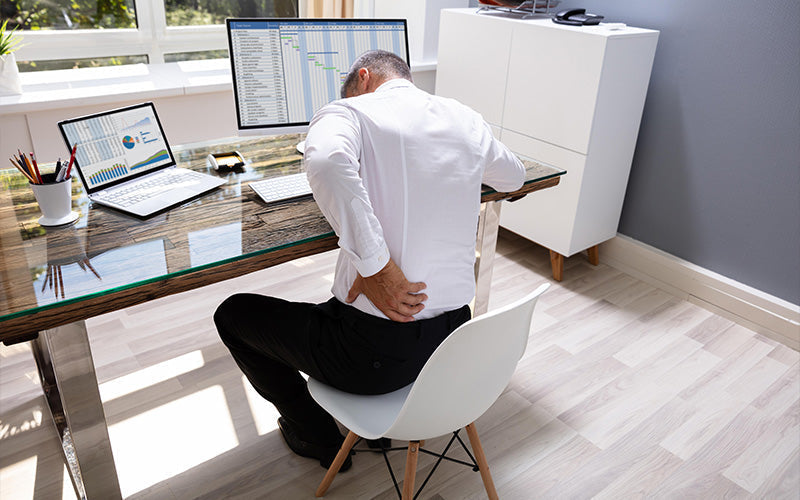
Many people associate physical fatigue with demanding activities such as lifting, carrying, walking long distances, or participating in sports. Sitting at a desk rarely falls into that category. Because office work appears physically easy, lower back fatigue is often dismissed as an unavoidable part of the working day.
Yet lower back fatigue when sitting is often one of the earliest physical signs that the body is managing more demand than people realise.
The modern workplace places unique expectations on the human body. While technology has reduced the need for many physically intensive tasks, it has simultaneously increased the amount of time spent sitting. Office workers, remote employees, students, and professionals across countless industries now spend much of their day seated. Although the workload may be mentally demanding, the physical demands are often underestimated.
The lower back plays a crucial role in maintaining upright posture. Even when movement is minimal, muscles surrounding the spine remain active to stabilise the torso against gravity. This activity is often subtle enough to go unnoticed, yet it requires energy. Over hours of uninterrupted work, that energy expenditure accumulates.
Unlike pain, fatigue tends to develop gradually. There is rarely a single moment when a person becomes aware that something has changed. Instead, they may notice that they feel heavier at the end of the day, find it harder to maintain posture, or experience a persistent sense of tiredness in the lower back region.
In Singapore's work environment, where digital work, hybrid arrangements, and prolonged screen use are increasingly common, lower back fatigue when sitting has become a familiar experience for many professionals. However, familiarity does not mean it should be ignored.
Understanding fatigue as a response to sustained postural demand helps move the conversation away from fitness, motivation, or resilience. It encourages a closer look at how the body manages physical load throughout the day and how workplace design can influence that process.
Key Takeaways
- Lower back fatigue from sitting often develops because the spinal muscles remain active for long periods, even during light physical tasks.
- Fatigue can occur without pain, making it an early indicator that the body is working harder than expected to maintain posture.
- Ergonomic support helps reduce unnecessary muscular effort, improving comfort and making prolonged sitting more sustainable.
Why Sitting Can Demand More From the Lower Back Than Expected

How Static Sitting Increases Continuous Lower Back Muscle Loading
At first glance, sitting appears passive. There is little movement, little visible effort, and few signs that the body is working.
The reality is quite different.
Why "Sitting Still" Does Not Mean the Lower Back Is Resting
Whenever a person sits upright, gravity continues to act on the body. Without muscular support, the torso would collapse forward. To prevent this from happening, muscles surrounding the lower back remain active throughout the sitting period.
This process involves continuous muscular engagement from structures responsible for spinal stability and posture control. Unlike dynamic activities, in which muscles repeatedly contract and relax, sitting often requires the same muscles to remain active for extended periods.
Because the effort level is relatively low, most people do not consciously notice it. Yet these muscles continue to consume energy every minute they remain engaged.
Over time, this ongoing activity contributes to lower back fatigue when sitting, particularly during long workdays with limited opportunities for movement.
Why Endurance Demand Builds Even Without Heavy Physical Effort
Many people assume fatigue only occurs when muscles work hard. In reality, endurance is equally important.
A muscle does not need to generate high force to become tired. It simply needs to remain active for long enough.
The lower back is particularly vulnerable to this type of demand because its role during sitting is largely stabilising rather than force-producing. The muscles are not lifting heavy objects or generating powerful movements. Instead, they are maintaining posture continuously.
This explains why lower back fatigue when sitting can feel surprisingly intense despite a lack of physically demanding activity. The challenge is not intensity, but duration.
Why Unsupported Sitting Shifts More Work to the Lower Back
The amount of effort required from the lower back depends significantly on how effectively the body is supported.
When external support is limited, muscles often compensate.
How the Body Compensates When External Support Is Insufficient
The pelvis and lumbar spine form the foundation of seated posture. When seating does not adequately support these structures, the body frequently responds by increasing muscular activity.
Rather than relying on the chair to maintain alignment, the lower back muscles assume greater responsibility for keeping the body upright. This compensation often occurs automatically and without conscious awareness.
As a result, lower back fatigue when sitting may develop more quickly because the muscles are performing tasks that could otherwise be shared with the seating system.
Many organisations invest in ergonomic office furniture because well-designed workstations help reduce unnecessary physical demands while supporting healthier posture habits.
How Repeated Micro-Adjustments Increase Total Muscle Effort
Most people do not remain perfectly still while sitting.
They lean forward to read documents, shift position during meetings, adjust their posture when they become uncomfortable, and repeatedly reposition themselves throughout the day.
While these movements are natural, they often involve small bursts of muscular activity. Every adjustment requires stabilising muscles to activate, reposition the body, and restore balance.
Individually, these actions seem insignificant. Collectively, they increase the total workload on the lower back.
This is one reason why lower back fatigue when sitting can accumulate even when posture appears relatively normal throughout the day.
Why Lower Back Fatigue Builds Gradually Without Triggering Pain
One reason fatigue is often ignored is that it does not always feel alarming.
People generally pay attention to pain. Fatigue tends to attract far less attention.
Why Fatigue and Pain Represent Different Physical Signals
Fatigue and pain are not the same thing.
Fatigue reflects declining muscular endurance. It signals that muscles are becoming less capable of sustaining ongoing activity. Pain, by contrast, often emerges later when tissues become irritated, overloaded, or stressed beyond their tolerance.
This distinction is important because lower back fatigue when sitting can persist for months without progressing to noticeable discomfort.
The absence of pain should not automatically be interpreted as the absence of physical demand.
How Fatigue Quietly Alters Sitting Behaviour Over Time
As endurance decreases, people often begin changing how they sit.
They may lean more heavily on armrests, shift weight unevenly, slouch more frequently, or seek additional support from surrounding surfaces.
These adjustments usually happen gradually. Because they develop over time, they often feel natural rather than noticeable.
Yet they can reinforce the cycle that contributes to lower back fatigue when sitting, especially when similar work patterns continue day after day.
What Prolonged Sitting Changes About Lower Back Function Over Time

How Sitting Limits Natural Load Distribution Across the Body
The human body is designed for movement.
Walking, standing, reaching, and changing positions help distribute the workload across multiple structures rather than concentrating it in one area.
What Changes When Movement Is Reduced
When movement decreases, the body's ability to share load decreases as well.
During prolonged sitting, fewer muscles actively support posture. The lower back often assumes a larger share of the stabilising responsibility, while other regions contribute less.
This reduction in natural load sharing can increase the likelihood of lower back fatigue when sitting, particularly during lengthy work sessions.
Why the Lower Back Becomes the Default Stabiliser
The lower back occupies a strategic position between the upper and lower body.
During sitting, it acts as a central stabilising region that helps maintain alignment against gravity. Without adequate variation in movement, this responsibility becomes increasingly concentrated.
The issue is not simply posture awareness. It is also a question of support distribution and how effectively the load is shared between the body and its environment.
As sitting time increases, lower back fatigue when sitting becomes a predictable outcome rather than an unexpected one.
Why Lower Back Fatigue Can Appear Even When Posture Looks Neutral
Many people assume that maintaining a visually correct posture will automatically prevent fatigue.
The reality is more complex.
The Difference Between Holding Posture and Being Supported
There is an important distinction between maintaining posture through effort and maintaining posture through support.
When posture is maintained primarily through muscular activity, muscles must remain continuously active. When support systems contribute effectively, muscles can relax periodically while alignment is maintained.
This difference helps explain why lower back fatigue can occur when sitting, even in individuals who appear to have excellent posture.
A high-quality ergonomic office chair, for instance, helps reduce the need for constant muscular stabilisation by supporting spinal alignment more effectively throughout the day.
How Support Distribution Influences Posture Sustainability
Long-term sitting comfort depends on more than awareness alone.
The body requires effective postural support over time for posture to remain sustainable throughout the workday. When support is poorly distributed, muscles must compensate continuously.
Over time, this increased demand contributes directly to lower back fatigue when sitting, even when a person remains conscious of their posture.
How Ergonomic Design Reduces Unnecessary Lower Back Muscle Effort
Ergonomic design focuses on reducing unnecessary physical demand rather than forcing the body to work harder.
At Ergoworks, we approach workplace wellbeing through the lens of posture science, movement, and long-term sustainability.
Rather than relying solely on reminders to sit correctly, ergonomic solutions aim to create environments that support the body's natural mechanics.
This approach becomes particularly important during extended durations of sitting, when small inefficiencies can accumulate significantly.
A height-adjustable desk encourages posture variation throughout the day, allowing users to alternate between sitting and standing positions. This change in working posture helps distribute the load more effectively and reduces prolonged demand on the lower back.
Similarly, monitor arms allow screens to be positioned at more appropriate heights and distances, reducing the tendency to lean forward or adopt awkward positions during computer use.
These adjustments may seem minor, yet they can play an important role in reducing lower back fatigue when sitting by minimising unnecessary muscular effort.
Ergoworks develops ergonomic solutions through collaboration with healthcare professionals and posture specialists, focusing on practical workplace applications rather than temporary comfort alone. Our goal is to support healthier sitting experiences that remain effective across entire working days, weeks, and years.
Questions You Might Ask
Why does lower back fatigue when sitting feel unavoidable during long workdays?
The lower back remains responsible for stabilising the spine during prolonged sitting. When sitting continues for several hours with limited variation in movement, muscular endurance gradually declines, making fatigue a predictable response.
Why does my lower back feel tired even when my posture seems fine?
Visually correct posture does not necessarily eliminate muscular effort. If muscles are working continuously to maintain alignment, lower back fatigue can still occur when sitting despite good posture awareness.
Can seating design influence lower back fatigue over time?
Yes. Seating design affects the amount of muscular effort required to maintain posture. Better support can reduce unnecessary demand and help make sitting more sustainable throughout the day.
Why does lower back fatigue often appear before pain?
Fatigue typically reflects reduced endurance, whereas pain often develops later when tissues become more significantly stressed. This is why lower back fatigue when sitting may be noticed long before discomfort appears.
Why does Ergoworks focus on fatigue and endurance rather than pain?
Addressing fatigue allows physical demands to be identified earlier. By reducing unnecessary workload before discomfort develops, ergonomic interventions can tackle lower back fatigue when sitting and support healthier long-term posture.
Conclusion
Lower back fatigue when sitting is not a sign of weakness, poor motivation, or inadequate fitness. In many cases, it reflects the physical demands placed on the body during prolonged seated work.
The lower back performs an important stabilising role throughout the day. When that role is repeated across long periods with limited variation or support, fatigue becomes a natural response. Understanding this process helps explain why lower back fatigue when sitting can develop even when tasks feel physically light and posture appears relatively normal.
At Ergoworks, we help individuals and organisations create healthier, more sustainable workplaces through science-led ergonomic solutions. Our offerings include seating systems, workstation accessories, collaborative workplace environments, and specialised spaces such as a meeting pod designed to support modern working styles while promoting comfort and productivity.
By improving workplace design and reducing unnecessary physical demands, it is possible to make prolonged sitting more sustainable and minimise lower back fatigue when sitting over time.
If you would like to better understand how workplace ergonomics can support posture, comfort, and long-term spinal wellbeing, contact us today. Our team can help you identify practical solutions tailored to your work environment and daily needs.

Leave a comment
This site is protected by hCaptcha and the hCaptcha Privacy Policy and Terms of Service apply.