


![Falcon Chair Office Chairs Falcon Chair [Free Footrest Worth $150] Ergoworks](http://ergoworks.com.sg/cdn/shop/files/Falcon_A.png?v=1786502358&width=104)



![Ergoworks Dual Benching Electric Desk [Customizable] Dual Benching Electric Desk Ergoworks](http://ergoworks.com.sg/cdn/shop/files/EW-0223H-2.jpg?v=1778755296&width=104)





![Impact Junior Desk Chair Set Impact Ergonomic Kids Desk & Chair Set [Chair & Length Options Available] Ergoworks](http://ergoworks.com.sg/cdn/shop/files/KidDeskMainImageFinal.png?v=1778618207&width=104)
![Impact Junior Desk Chair Set Impact Ergonomic Kids Desk & Chair Set [Chair & Length Options Available] Ergoworks](http://ergoworks.com.sg/cdn/shop/files/gray_ff76a24f-26d1-469b-b2d5-0013d4a950d7.jpg?v=1785487301&width=104)





Key Takeaways
- Balanced lower-body support distributes body weight more evenly across the ankles, knees, and hips during prolonged sitting, enhancing overall joint comfort throughout daily desk routines.
- Small, repeated positioning habits during work or study can gradually affect how your joints respond to sustained loads, which is why maintaining a consistent sitting posture over time is important.
- A stable base through the lower body helps the rest of the posture remain more relaxed, allowing the hips and spine to maintain natural alignment during extended seated tasks.
- Simple workstation adjustments, such as setting the correct seat height, ensuring sufficient desk clearance, and using a footrest, can help maintain comfortable sitting during long hours of desk work.
Introduction
Modern work routines in Singapore often involve long hours of sitting, whether in corporate offices, home workspaces, or study environments. While many people focus on back support or desk height, lower-body positioning is equally important for maintaining everyday comfort. One simple but frequently overlooked habit is keeping the feet flat on the floor while seated. This minor adjustment influences how body weight is distributed while sitting for long periods and supports a more stable posture over time.
When lower-body alignment is stable, the body is better able to manage physical load during desk work. Understanding how seated posture affects joints can help individuals make small adjustments that support comfort, mobility, and long-term well-being.
How Balanced Lower-Body Support Helps Your Joints Manage Daily Sitting
When sitting, body weight travels through a chain that begins at the feet and moves upward through the ankles, knees, hips, and spine. Keeping the feet flat on the floor helps maintain this natural support chain, allowing weight to be distributed more evenly across multiple joints.
This relationship between lower-body positioning and joint health becomes especially relevant during prolonged office work. When the feet are supported evenly, the lower body helps absorb and distribute pressure rather than concentrating it in one area. For this reason, chair height should also be adjusted so the feet can rest comfortably on the floor while the knees and hips remain in a more relaxed position.
What Happens When Weight Moves Through the Lower Body During Sitting
Understanding how the body distributes weight while seated can help explain why foot support matters more than many people realise.
- The feet form the initial point of contact with the ground, providing a stable base of support.
- The ankles stabilise the lower leg, allowing pressure to be distributed evenly.
- The knees guide the transfer of load upward while maintaining joint alignment.
- The hips absorb and distribute body weight toward the pelvis and spine.
When these joints distribute the load evenly, the body can maintain a more stable sitting posture throughout the day. Proper support through the lower body helps maintain smoother movement and more consistent comfort during desk-based work.
Why Joint Strain Often Develops Gradually During Desk Work
Joint discomfort rarely appears suddenly during desk work. Instead, it tends to develop through repeated exposure to small postural imbalances that accumulate. One of the most common contributors to this gradual strain is prolonged sitting without changes in position. When the body experiences uneven joint loading during seated work, these subtle changes gradually influence how joints respond to daily movement.
For example, when the feet are unsupported or positioned unevenly, weight distribution across the ankles, knees, and hips may shift slightly. The body often compensates for these changes automatically, which is why discomfort may not appear immediately. Over weeks or months, however, these small adjustments can influence joint tolerance and overall ease of movement during routine activities.
Recognising how strain develops gradually encourages a preventive approach to workstation setup rather than waiting for discomfort to appear.
What Happens to Your Joints During Prolonged Sitting
Remaining seated for extended periods can affect how joints respond to sustained pressure. Without regular movement, joints may experience continuous compression, which is often noticed later as stiffness rather than immediate discomfort.
In many Singapore workplaces and home offices, long stretches of screen-based work make it easy to remain still without noticing. Introducing occasional changes in position can help reduce this effect. Alternating between sitting and standing during the workday is one practical way to reduce prolonged joint pressure. Using a height-adjustable table can support these natural transitions throughout the day.
Common Signs Your Body Has Been Sitting Too Long
Before noticeable discomfort develops, the body often shows subtle signals that joints have been under prolonged stillness for extended periods. Recognising these early signs can help individuals adjust their sitting habits before strain builds up.
- Mild stiffness when standing up after extended sitting
- A sense of heaviness around the hips or knees
- Reduced ease when beginning to walk after sitting
- Tightness in the lower back or thighs after long work sessions
These signals often reflect the body responding to prolonged stillness rather than a single moment of strain. Introducing small posture adjustments and short movement breaks throughout the day can help maintain smoother and more comfortable movement during daily work routines.
How Foot Position Influences Whole-Body Sitting Posture
Lower-body positioning forms the foundation of seated posture. When the feet are supported evenly on the floor, the hips remain more balanced and the spine can settle into a more natural alignment. This stable base allows the rest of the body to maintain a more relaxed posture during desk-based tasks.
When the feet are not properly supported, the body often compensates by shifting weight toward the thighs, hips, or lower back. Over time, these small adjustments can influence how surrounding joints and muscles respond to prolonged sitting.
By stabilising the lower body first, many people find it easier to maintain a comfortable upper-body posture while working, reading, or studying for extended periods. This is why consistent lower-body support is often one of the first adjustments recommended when improving workstation ergonomics.
How Foot Position Influences Whole-Body Sitting Posture
Lower-body positioning forms the foundation of seated posture. When feet rest flat on the floor, the hips remain more balanced, and the spine can settle into a more natural alignment.
When the feet are not properly supported, the body often shifts more weight to the thighs and hips, which can gradually increase pressure across the lower body.
If the feet are tucked beneath the chair or left unsupported, the body often compensates by shifting weight elsewhere to maintain balance. These adjustments may involve subtle tension in surrounding muscles or changes in how the hips and lower back respond to prolonged sitting.
By stabilising the lower body first, many people find it easier to maintain a relaxed upper-body posture while working, reading, or studying for extended periods.
How to Set Up Your Workspace So Your Feet Stay Properly Supported
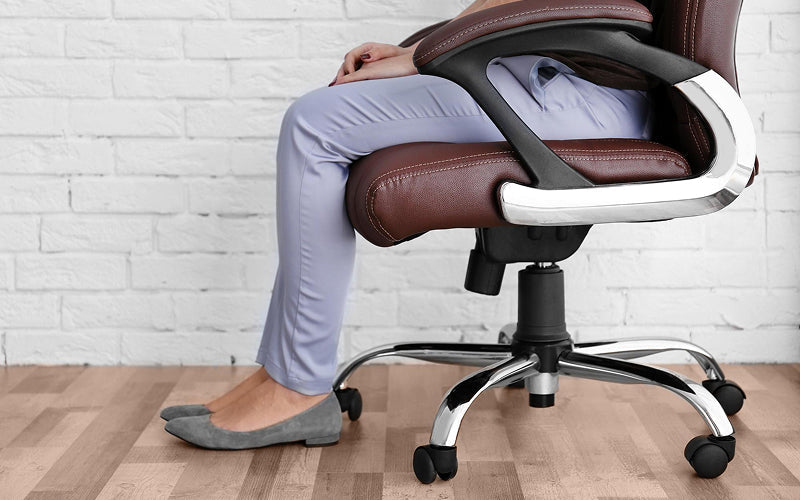
Achieving comfortable lower-body alignment often begins with a few simple adjustments to the workstation. The most important factor is ensuring that the seat height allows your feet to rest flat on the floor without causing excessive pressure behind your thighs.
A well-designed ergonomic office chair often allows users to adjust seat height, seat depth, and back support so the lower body remains comfortably aligned beneath the desk. Ideally, the knees should sit roughly level with or slightly below the hips, allowing the lower body to remain relaxed.
Simple Setup Adjustments That Help Keep Your Feet Properly Supported
A few practical adjustments can help maintain consistent lower-body support during seated work.
- Adjust the seat height so both feet can rest evenly on the floor.
- Ensure there is sufficient clearance beneath the desk to allow for comfortable knee positioning.
- Use a footrest if your feet cannot consistently reach the floor.
- Maintain balanced contact between both feet and the ground while seated.
These adjustments allow the lower body to serve as a stable base that supports the rest of your sitting posture.
Why Early Signs of Strain Often Feel Like Stiffness Rather Than Pain
Before noticeable discomfort develops, strain often appears as subtle changes in everyday movement. Some people may notice that sitting feels less comfortable than before, or that standing up after desk work requires a brief adjustment.
Maintaining a consistently supported seated posture helps the body distribute load more evenly across the lower joints during daily work routines. When proper lower-body support becomes a habit, transitions between sitting, standing, and walking often feel smoother and more natural.
Recognising these early changes encourages small ergonomic improvements before strain builds up over time.
Conclusion
A single dramatic change rarely determines long-term joint comfort. Instead, it is shaped by everyday habits and the small adjustments people make to their workspace. Keeping feet flat on the floor during seated activities helps maintain balanced load distribution, supports natural movement patterns, and reduces unnecessary strain across the lower body.
If you are reviewing your workstation setup, start by checking whether your seat height allows your feet to rest comfortably on the ground while working. Small adjustments to your chair and desk height can make a noticeable difference in how your body feels throughout the day. Explore ergonomic seating and workspace solutions from Ergoworks that are designed to support balanced sitting posture and everyday comfort in both home and office environments.



Leave a comment
This site is protected by hCaptcha and the hCaptcha Privacy Policy and Terms of Service apply.