


![Falcon Chair Office Chairs Falcon Chair [Free Footrest Worth $150] Ergoworks](http://ergoworks.com.sg/cdn/shop/files/Falcon_A.png?v=1786502358&width=104)


![Ergoworks Dual Benching Electric Desk [Customizable] Dual Benching Electric Desk Ergoworks](http://ergoworks.com.sg/cdn/shop/files/EW-0223H-2.jpg?v=1778755296&width=104)





![Impact Junior Desk Chair Set Impact Ergonomic Kids Desk & Chair Set [Chair & Length Options Available] Ergoworks](http://ergoworks.com.sg/cdn/shop/files/KidDeskMainImageFinal.png?v=1778618207&width=104)
![Impact Junior Desk Chair Set Impact Ergonomic Kids Desk & Chair Set [Chair & Length Options Available] Ergoworks](http://ergoworks.com.sg/cdn/shop/files/gray_ff76a24f-26d1-469b-b2d5-0013d4a950d7.jpg?v=1785487301&width=104)








Key Takeaways
- Prolonged screen focus places continuous demand on the eyes, and the resulting fatigue often develops gradually before noticeable discomfort appears.
- Sustained visual attention can subtly influence head position and posture, increasing muscle engagement in the neck and upper back over time.
- The eyes, neck, and shoulders function as an interconnected system during desk-based work, meaning visual effort can contribute to physical tension.
- Incorporating regular viewing breaks alongside a well-supported workstation helps reduce accumulated strain during long hours of screen use.
Introduction
Modern work routines often involve extended hours in front of digital screens, whether in corporate offices, home workspaces, or study environments. While screen use is widely associated with tired eyes, the effects of prolonged visual focus extend far beyond what many people realise. The 20-20-20 rule is commonly recommended as a simple strategy to reduce eye discomfort.
However, its relevance extends beyond offering brief visual breaks. It highlights how sustained screen attention influences posture, muscle engagement, and overall physical comfort throughout the workday. Understanding this relationship allows working professionals, students, and homeowners to set up workspaces that treat visual fatigue not only as an eye concern but also as an early signal that the body is under continuous demand.
How Prolonged Screen Viewing Gradually Increases Visual Fatigue
Extended periods of close screen viewing place continuous demand on the visual system, particularly when focus remains fixed at the same distance for long stretches. Over time, screen-related visual load increases as the eyes maintain constant attention on text, spreadsheets, or digital interfaces.
Because this build-up develops slowly, it often goes unnoticed at first, with many people only recognising the strain when discomfort appears later in the day. In desk-based routines, visual fatigue frequently becomes one of the earliest signals that the body is working harder than it appears, even when movement is minimal.
Why Sustained Screen Focus Can Change Head and Neck Support
As visual demand increases, subtle adjustments in head position naturally occur to maintain a clear view of the screen. These small shifts might involve leaning slightly forward, tilting the chin downward, or reducing the viewing distance without conscious awareness.
Over time, these repeated adjustments alter how the head is supported, placing greater reliance on surrounding muscles rather than the body’s natural structural balance. Taking regular visual breaks allows the head and neck to realign, helping reduce the gradual muscular strain that builds up during extended screen use.
How Eye Strain Contributes to Upper-Body Tension Over Time
The eyes, neck, and shoulders function as an interconnected system during digital work. When visual effort remains high, surrounding muscles often increase their engagement to stabilise the head and maintain focus. Over time, this can contribute to a gradual build-up of tightness across the shoulders and upper back.
For many individuals experiencing desk-based eye strain, the physical discomfort that follows may not immediately appear related to the eyes at all. Workspace features such as a properly positioned ergonomic desk help maintain a comfortable viewing height, reducing repeated head adjustments that can contribute to tension.
What Visual Fatigue Can Reveal About Overall Physical Load

Persistent visual strain often reflects a broader pattern of sustained physical demand. When attention remains fixed on a screen without variation, multiple systems within the body absorb the workload simultaneously. Muscles supporting the head, neck, and upper body remain engaged even though the individual appears stationary. Introducing regular visual pauses throughout the work routine helps interrupt this continuous demand. These short intervals help interrupt the strain on both the visual system and surrounding muscles, giving the body a brief chance to recalibrate before additional tension accumulates.
For individuals reassessing their work environment, one practical step is to consider how they shop for office furniture that supports better screen positioning and posture. Recognising these signals is often the first step toward improving how a workspace supports healthier daily screen use.
How Desk Setup Helps the 20-20-20 Rule Work More Effectively
While the 20-20-20 rule is simple in principle, its effectiveness depends on how well the workstation supports comfortable viewing. Screen height, viewing distance, and posture all affect how easily the body can relax during short visual breaks. When the workspace encourages neutral alignment, these pauses become opportunities for both visual and physical reset.
A Stable Screen Position Helps Reduce Repeated Head Adjustments
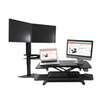
A stable screen position reduces the need for constant micro-adjustments while focusing on digital tasks. When screens sit outside a comfortable viewing range, many people instinctively lean forward or tilt their heads to maintain clarity. Over time, these small adjustments can gradually increase strain across the neck and upper back. Adjustable monitor arms help maintain consistent screen positioning, keeping the display at a comfortable height and distance throughout the day.
Proper Screen Height Supports Natural Head Alignment
Screen height plays an important role in supporting the head and neck during prolonged work. If the screen sits too low, users may tilt their heads downward to see clearly. If it sits too high, the chin may lift slightly to compensate. To keep your neck and shoulders more relaxed during extended screen use, maintain an appropriate screen height that supports neutral head alignment.
Short Visual Breaks Create Opportunities for Posture Reset
Short visual pauses do more than give the eyes a moment of relief. Looking away from the screen naturally encourages the eyes to refocus at a different distance while allowing surrounding muscles to relax. These pauses also create opportunities to reset posture and release accumulated tension before returning to work. Over time, simple routines like this help support a healthier rhythm during desk-based work.
Why the 20-20-20 Rule Supports a Preventive Ergonomic Approach

Rather than viewing the 20-20-20 rule purely as an eye-care habit, it can also be understood as a preventive ergonomic practice. The habit encourages regular interruptions of sustained visual focus, allowing both the eyes and supporting muscles to recover before strain becomes more noticeable. This perspective emphasises the link between visual fatigue and physical strain, underscoring that screen-related discomfort rarely affects only a single part of the body.
Small daily habits, such as taking regular visual breaks, can make a meaningful difference in how the body copes with screen-based work. A well-planned workspace supports these habits, making it easier to stay comfortable and focused throughout the day. If you are reviewing your home or office setup, exploring ergonomically designed furniture and workstation solutions from Ergoworks can help you build a workspace that supports both visual comfort and long-term physical well-being.


Leave a comment
This site is protected by hCaptcha and the hCaptcha Privacy Policy and Terms of Service apply.