


![Falcon Chair Office Chairs Falcon Chair [Free Footrest Worth $150] Ergoworks](http://ergoworks.com.sg/cdn/shop/files/Falcon_A.png?v=1786502358&width=104)





![Ergoworks Dual Benching Electric Desk [Customizable] Dual Benching Electric Desk Ergoworks](http://ergoworks.com.sg/cdn/shop/files/EW-0223H-2.jpg?v=1778755296&width=104)





![Impact Junior Desk Chair Set Impact Ergonomic Kids Desk & Chair Set [Chair & Length Options Available] Ergoworks](http://ergoworks.com.sg/cdn/shop/files/KidDeskMainImageFinal.png?v=1778618207&width=104)
![Impact Junior Desk Chair Set Impact Ergonomic Kids Desk & Chair Set [Chair & Length Options Available] Ergoworks](http://ergoworks.com.sg/cdn/shop/files/gray_ff76a24f-26d1-469b-b2d5-0013d4a950d7.jpg?v=1785487301&width=104)









Key Takeaways
-
Shoulder discomfort in desk workers often develops gradually due to prolonged static positioning rather than sudden injury.
-
Fixed desk heights, unsupported arms, and poorly positioned screens can subtly increase upper body strain throughout the workday.
-
Limited movement variation reduces tissue adaptability over time, making the shoulder region more sensitive to everyday tasks.
-
Early workstation adjustments and ergonomic review can help prevent persistent discomfort and support long-term musculoskeletal health.
Introduction

A pinched nerve in the shoulder is often associated with sports injuries or underlying medical conditions. It occurs when surrounding tissues, such as muscles, tendons, or joint structures, place sustained pressure on a nerve, affecting how signals travel and how the area feels during movement.
However, for many desk-based professionals in Singapore, discomfort develops over repeated workdays through everyday work routines. Hours spent at a desk, whether in a corporate office or a home workspace, can place consistent demand on the upper body without obvious warning signs. Repeated positioning without adequate variation influences how muscles, joints, and connective tissues interact with nearby nerve pathways, which helps explain why symptoms build over time rather than appearing suddenly.
A Pinched Nerve In The Shoulder Can Develop Quietly In Desk Workers
While acute trauma can trigger nerve symptoms, a pinched nerve in the shoulder among office employees often arises from accumulated physical stress. Repetitive computer use, prolonged mouse handling, and fixed desk heights keep the shoulder in a relatively constant angle. When this posture is repeated daily, tissues surrounding the nerve adapt to restricted movement patterns. The result is subtle compression or heightened sensitivity that may only become noticeable after weeks or months of static positioning.
Because the neck and shoulder region share closely connected structures, prolonged shoulder positioning can also influence how comfortably the entire upper quadrant functions during desk tasks.
What A Static Work Routine Looks Like For The Shoulders
Before discomfort becomes obvious, the early signs are usually visible in how the shoulders are positioned during routine desk work.
What Static Shoulder Positioning Looks Like During Desk Tasks
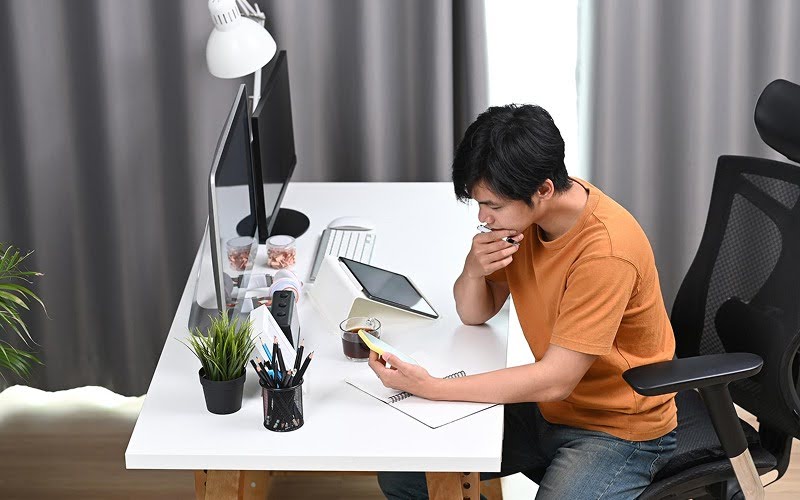
When working at a fixed-height desk, the shoulders often remain slightly elevated or rounded forward. The dominant arm may stay extended toward a mouse, while the opposite side stabilises the upper body with minimal variation. Because the arms are supported in only one position for extended periods, muscles around the upper back and neck remain partially engaged instead of cycling between activation and rest.
Over time, prolonged static posture increases ongoing strain on the muscles around the shoulder. When natural movement throughout the day decreases, these muscles become less resilient, making everyday actions such as reaching or rotating more likely to cause discomfort.
Why Desk Height And Screen Placement Influence Shoulder Load
Workstation configuration directly affects how much demand is placed on the shoulders. When a desk is slightly too high, the arms must lift subtly to reach the keyboard. If a screen sits too low, the upper body leans forward, drawing the shoulders ahead of the torso. In both situations, the shoulder complex compensates by sustaining low-level muscular activity.
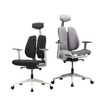
Introducing supportive adjustments can help redistribute that load. For example, choosing an ergonomic chair for your home workspace that provides proper arm support and adjustable height can prevent your shoulders from lifting unnecessarily. When your arms are supported at a comfortable, natural level, your shoulders and neck don’t have to work as hard to hold them up. This reduces the build-up of tension that often occurs when your desk setup forces you into an awkward position for long periods.
How Prolonged Stillness Influences Nerve Sensitivity Over Time
Nerve pathways depend on small, regular changes in position to maintain comfortable movement and spacing. When the shoulders and upper back remain held in fixed positions, surrounding tissues become progressively less adaptable. This reduction in variability can limit how freely nerves glide within their pathways, increasing sensitivity and contributing to shoulder nerve irritation.
In many cases, sharp pain does not appear immediately. Instead, the muscles around the shoulder slowly become less adaptable. When they cannot adjust smoothly to normal daily movements, simple tasks such as typing or reaching may begin to feel unusually effortful.
Why Shoulder-Related Nerve Discomfort Often Feels Unclear At First
Early symptoms of a pinched nerve in the shoulder rarely present as intense or clearly localised pain. More commonly, individuals report mild heaviness, occasional tingling down the upper arm, or an undefined awareness around the shoulder blade. Because these sensations fluctuate and may ease after rest, they are often dismissed as temporary stiffness rather than early signs of work-related nerve compression.
This lack of clarity means routines often remain unchanged. Without addressing underlying positioning habits, cumulative strain can gradually increase nerve sensitivity. By the time discomfort becomes more noticeable, the shoulder region may already have been under sustained demand for an extended period.
How Sustained Muscle Engagement Changes The Nerve Environment
When the muscles around your shoulders stay slightly tense for long periods, it can change how the nerves move through that area. Nerves need a bit of space and flexibility to glide smoothly as you reach, type, or adjust your posture. But when the surrounding muscles remain tight, they create constant pressure around those nerve pathways.
This usually doesn’t cause sharp pain right away. Instead, it makes the area less comfortable and less adaptable. Over time, even small movements can start to feel irritated because the nerve is moving within already tight, stressed tissue rather than relaxed, flexible muscle.
Supportive seating can reduce unnecessary strain on your shoulders and upper back. A breathable mesh chair that encourages an upright posture helps your shoulders stay in a relaxed, natural position instead of rounding forward or lifting upward. When your body is properly supported, your muscles don’t have to work as hard to hold you up. This reduces ongoing pressure around the shoulders and helps prevent irritation of the surrounding nerves.
Why Limited Movement Affects Nerve Comfort Differently From Active Use
Movement variation plays a protective role in maintaining tissue resilience. During active tasks, the shoulders alternate between different ranges of motion, allowing tissues to share load and recover. In contrast, static positioning concentrates demand on the same structures for prolonged periods. This difference helps explain why a pinched nerve in the shoulder may develop even in individuals who are not engaged in physically strenuous activities.
Simple setup adjustments can introduce healthier variation. Elevating a screen using an ergonomic laptop stand supports more neutral head and shoulder positioning, reducing the tendency to lean forward and sustain upper limb tension. Encouraging periodic changes in arm position and screen height throughout the day further supports tissue adaptability.
Why Early Awareness Supports Long-Term Shoulder Comfort

Because symptoms often appear subtly over time, a pinched nerve in the shoulder can be perceived as a normal part of desk work rather than a signal of cumulative strain. Paying attention to recurring heaviness, reduced tolerance for sitting, or subtle arm symptoms allows individuals to review their workstation before irritation becomes persistent.
For organisations in Singapore, this awareness aligns with workplace health considerations and productivity goals. For families and new homeowners setting up study areas, it reinforces the importance of thoughtful workstation planning from the start.
If you are noticing gradual shoulder discomfort during desk work, take time to assess how your chair height, screen position, and arm support are influencing your posture. Small setup adjustments can significantly reduce unnecessary strain with consistent use. Consider booking a personalised ergonomic assessment with Ergoworks to ensure your workstation properly supports long-term shoulder comfort and spinal health.


Leave a comment
This site is protected by hCaptcha and the hCaptcha Privacy Policy and Terms of Service apply.